


In the high-stakes world of fine gemstones, understanding the origin and authenticity of an emerald is paramount. Today, gemologists act much like forensic scientists, relying on microscopic inclusions and advanced chemical data to unlock a gemstone's hidden history. By decoding the "emerald micro-world," researchers can now trace a stone back to its exact geological birthplace, uncover hidden treatments, and separate natural wonders from sophisticated synthetics.
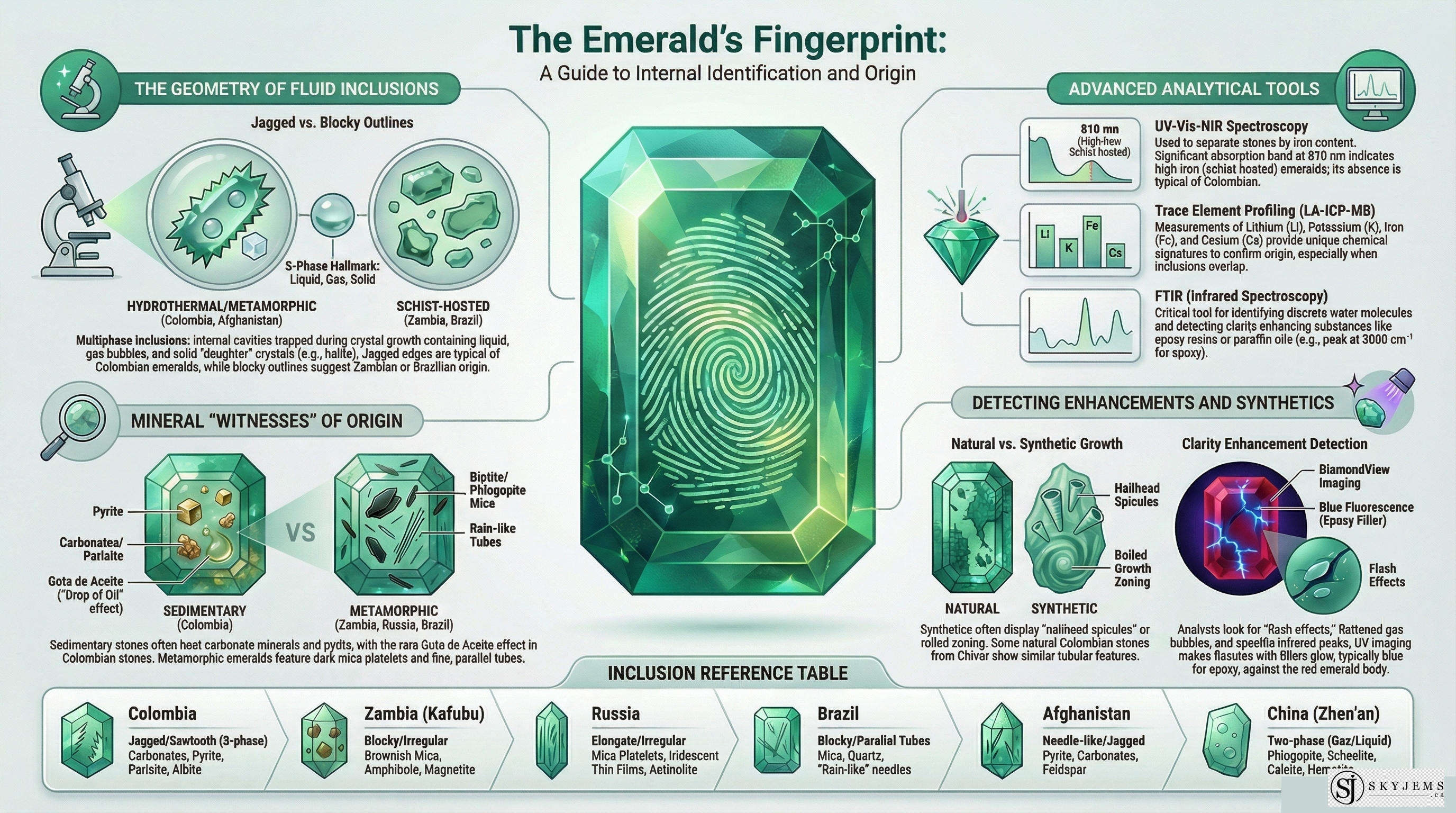
Fingerprint inclusion patterns reveal an emerald's geological narrative
Chemical Fingerprinting: Pinpointing Geographic Origin
One of the most exciting breakthroughs in modern gemology is the ability to determine the geographical origins of natural emeralds through nondestructive chemical fingerprinting. By studying the trace elements—or chromophores—responsible for the gemstone's color, scientists can accurately pinpoint where the stone was mined.
For example, in the Cordillera Oriental region of Colombia, emeralds from mines located only a few miles apart can be distinguished from one another. This incredible precision is possible because trace elements like vanadium, nickel, and magnesium vary geographically. These variations are the direct result of unique interstitial fluid migrations that occurred just before the emerald crystals precipitated in the earth. Furthermore, comprehensive petrographic, spectroscopic, and chemical examinations have provided new models for understanding the complex formation of rare Colombian trapiche emeralds.
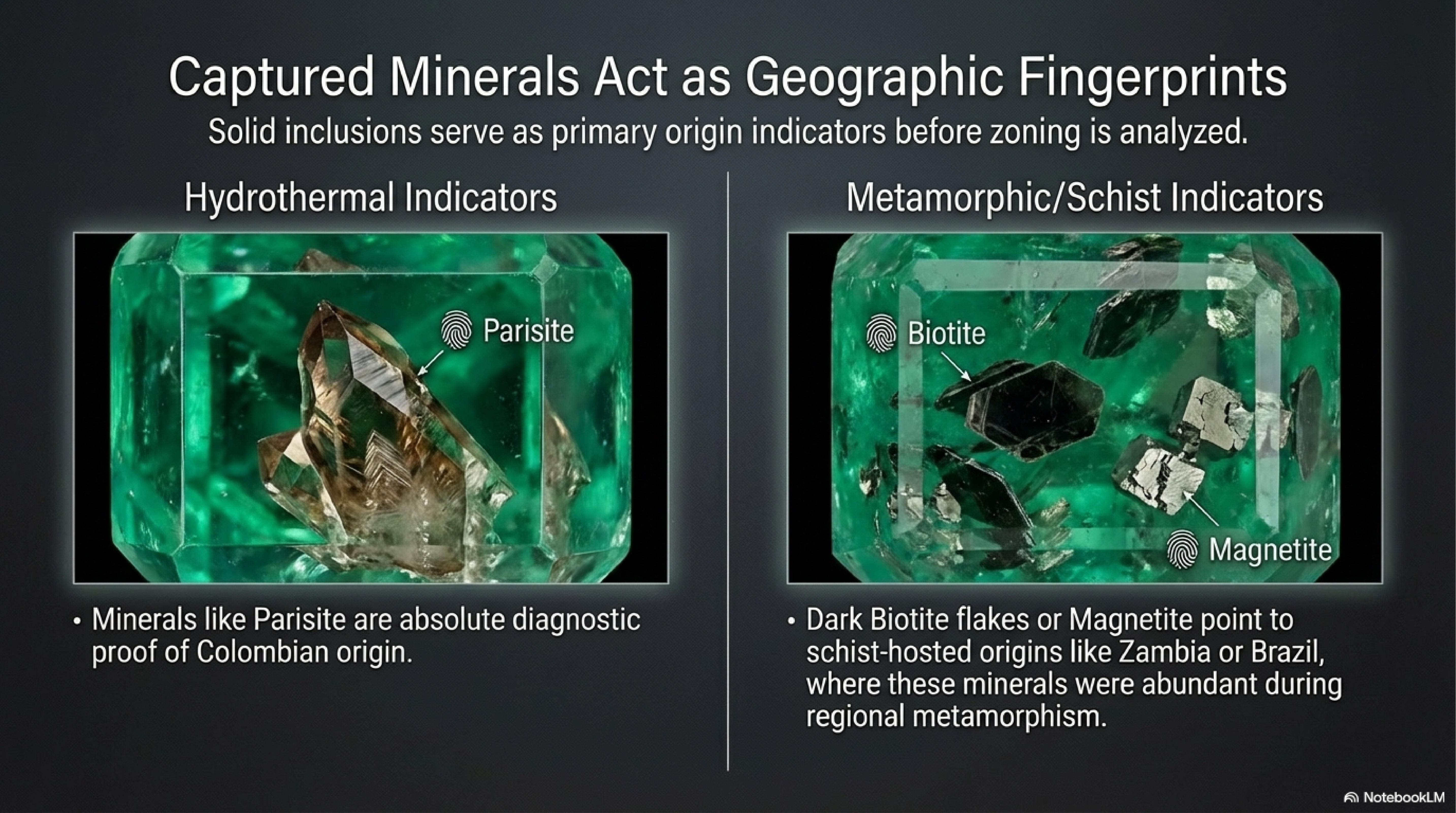
Chemical analysis reveals unique trace element signatures by geographic origin
Detecting Treatments and Enhancements
Beyond determining origin, forensic gemology is critical for detecting artificial treatments. Because emeralds naturally contain fractures, they are frequently treated with oils or resins to improve their apparent clarity. When examining these stones, gemologists look for specific visual and optical signatures.
For instance, laboratory experts frequently encounter resin-filled emeralds, primarily of Colombian origin. Under magnification, these filled fractures often betray themselves by exhibiting a pronounced "flash effect". Additionally, these resin fillers can sometimes be detected by their moderate luminescent reactions—displaying both fluorescence under long-wave ultraviolet light and phosphorescence under short-wave UV.
Magnification reveals treatment signatures invisible to the naked eye

Key characteristics that distinguish natural emeralds from treated specimens
Separating the Natural from the Synthetic
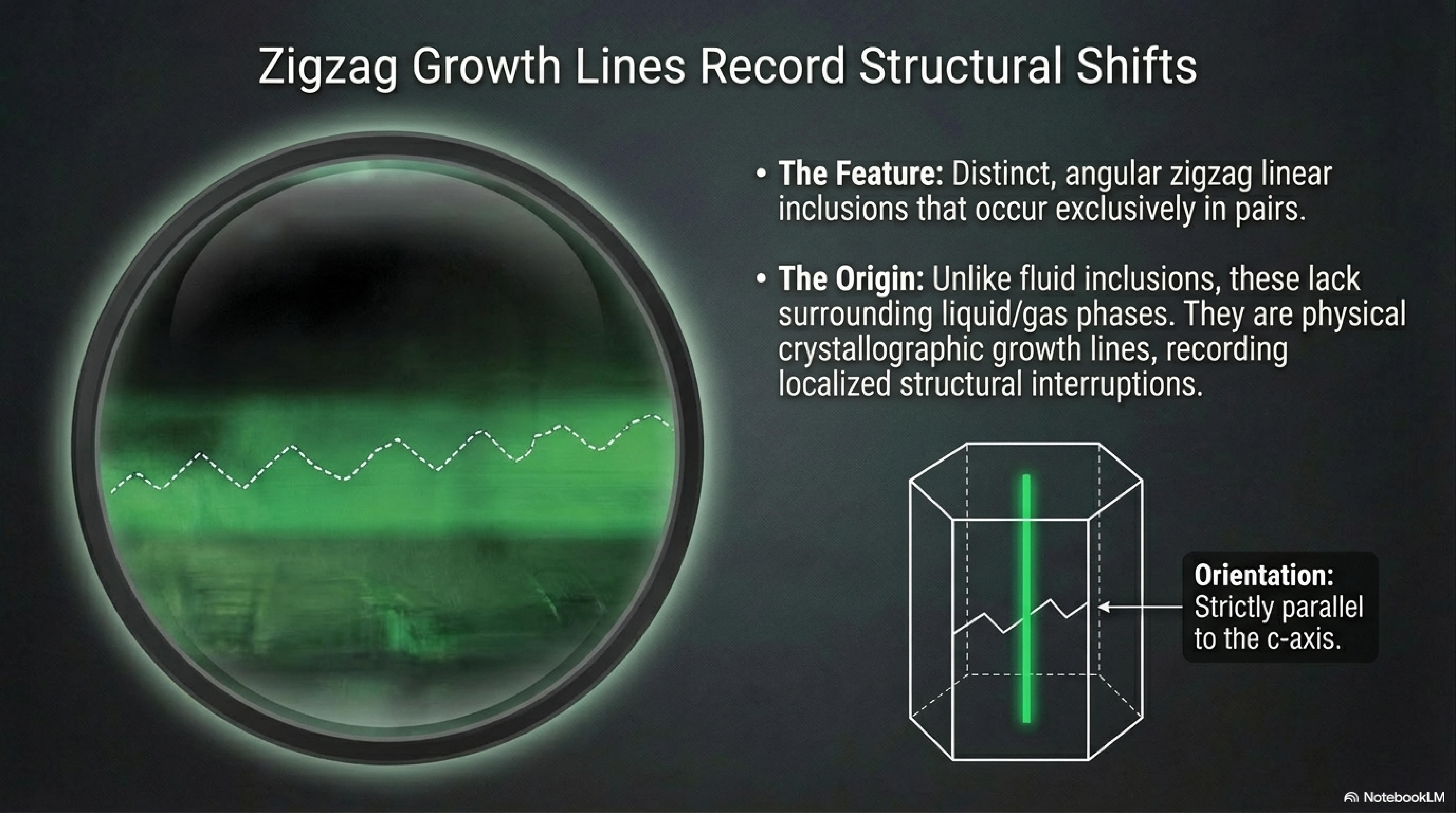
As laboratory-growth techniques become more advanced, the forensic signatures used to separate natural emeralds from synthetic ones become increasingly vital. Gemologists must be intimately familiar with the distinctive features of various manufactured stones to prevent fraud.
Recent decades have seen the introduction of highly convincing synthetics, such as new types of Russian hydrothermal synthetic emeralds. Similarly, hydrothermally grown synthetic emeralds have been manufactured in the Czech Republic since 2003. To protect the trade, gemologists carefully document the unique internal characteristics and chemical properties of these materials so they can be reliably separated from both natural emeralds and other synthetics on the market.

Comparative analysis: natural versus synthetic emerald inclusions
Conclusion
The beauty of an emerald is no longer judged solely by its face-up color. By decoding the forensic signatures hidden within the emerald micro-world, modern gemologists can reveal the true narrative of a stone—from the deep geological fluids that formed it, to the treatments it may have endured—ensuring trust and transparency in the global gem trade. For collectors seeking authenticated, provenance-verified emeralds and diamonds, this science underpins every acquisition of lasting value.
Watch the Video Series
Three short films on the forensic science behind emerald authentication.
I · Decoding the Emerald Micro-World
II · Gota de Aceite
III · Three Mines, Three Fingerprints


Leave a comment
This site is protected by hCaptcha and the hCaptcha Privacy Policy and Terms of Service apply.