
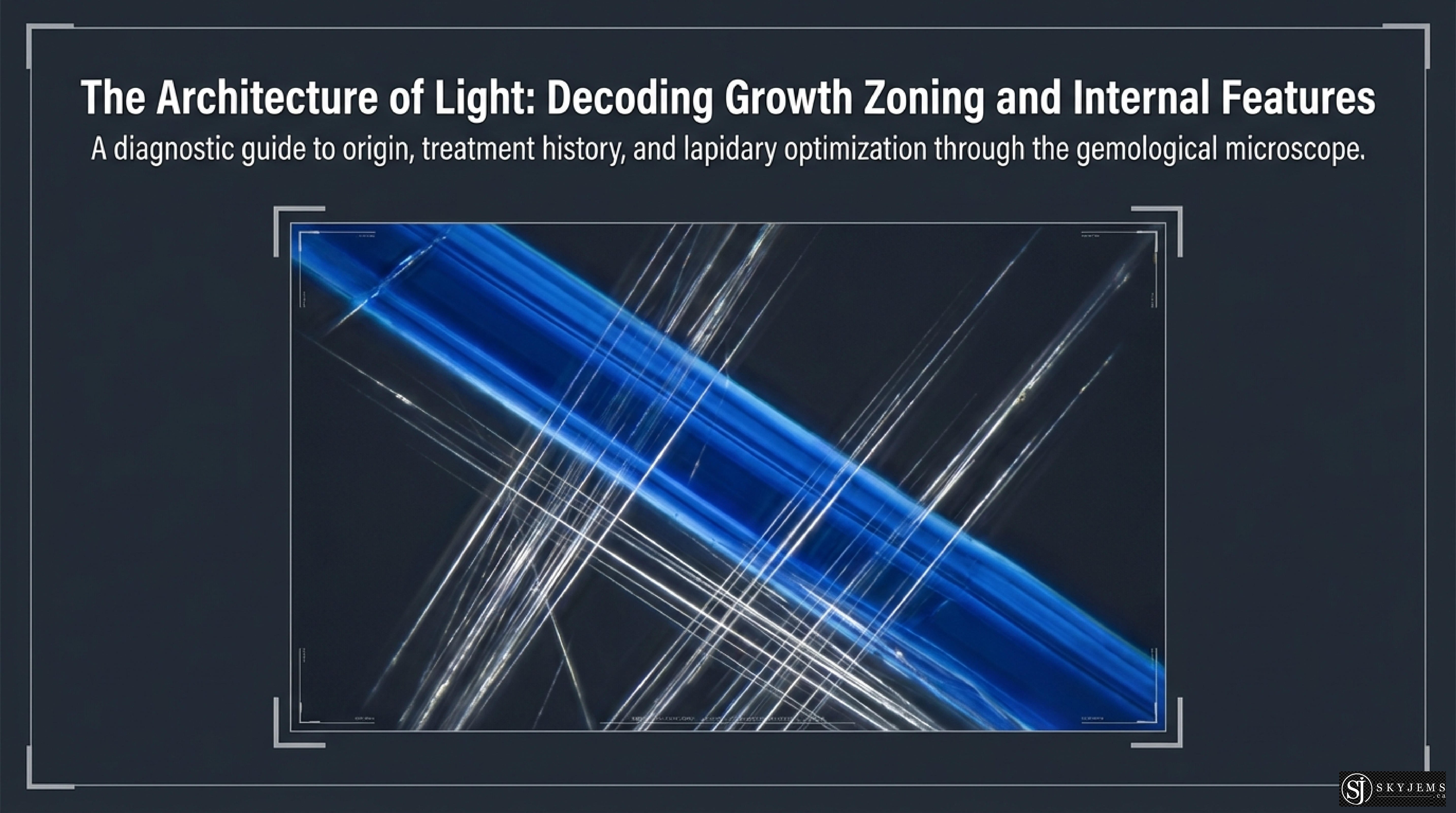
Gemstone Internal Architecture: The 3D Micro-World
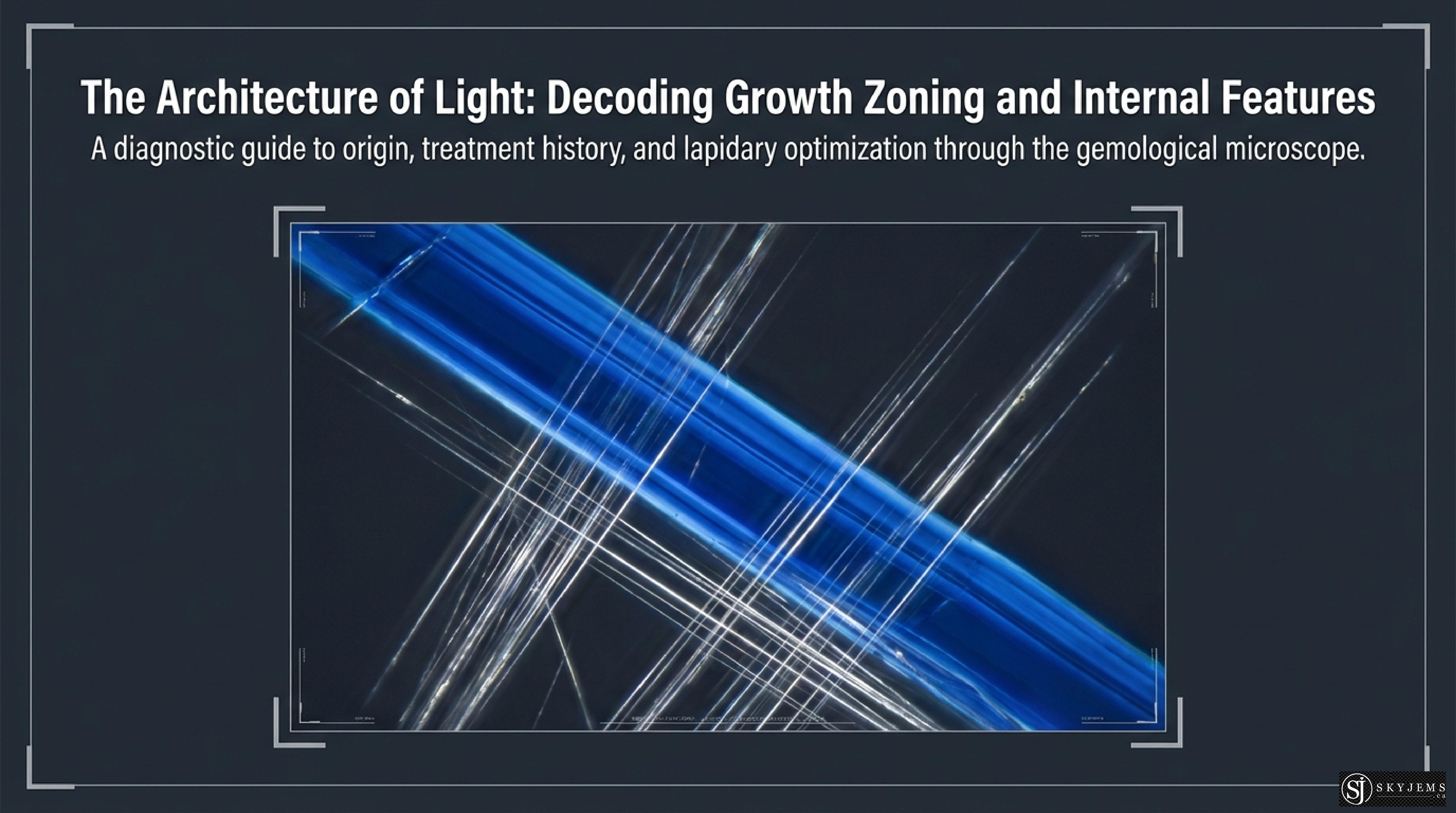
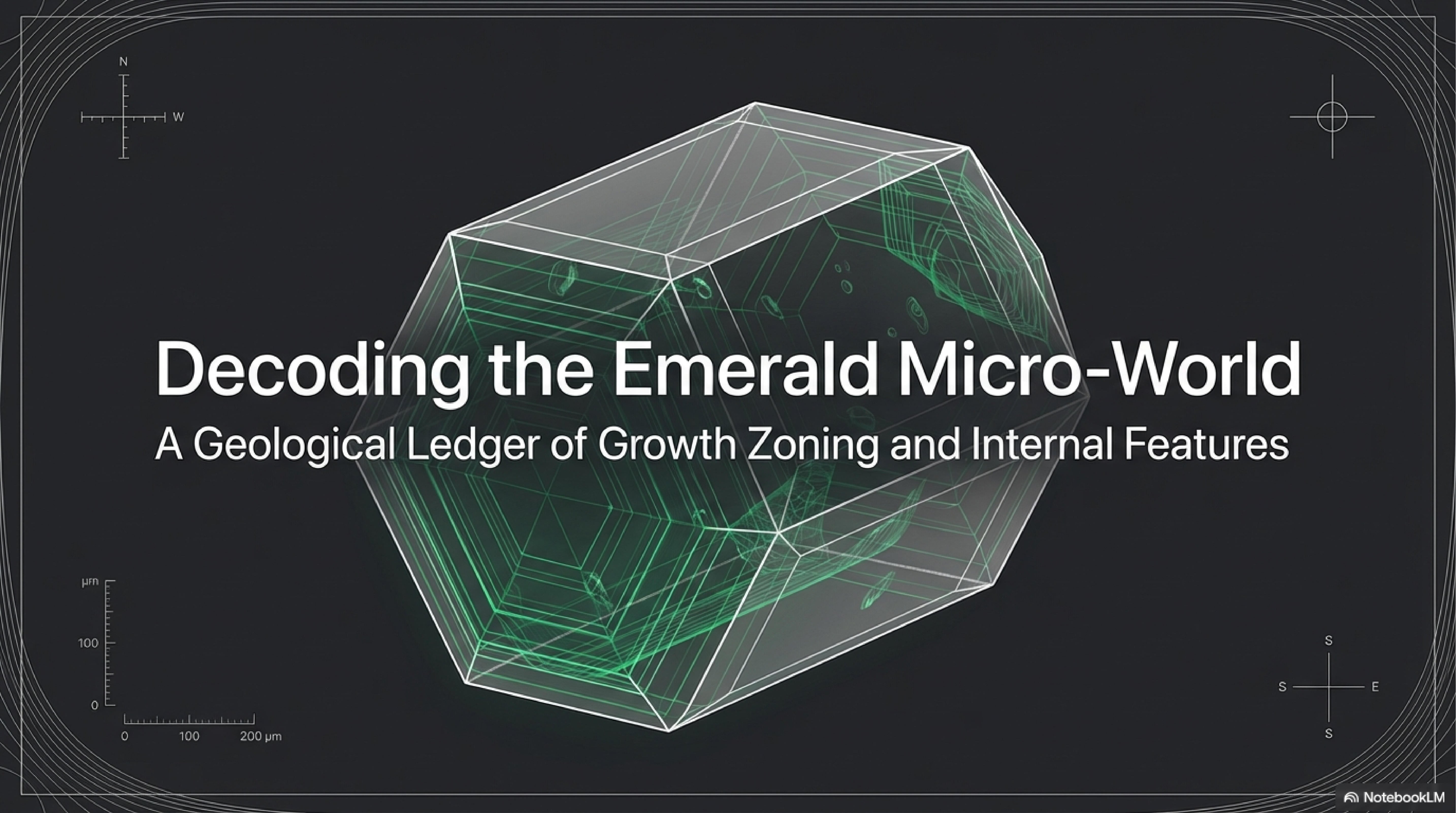
When we admire a faceted gemstone, we are observing how light interacts with its external shape and polish. However, a gemstone's true identity is locked within its internal architecture. From the arrangement of its crystal lattice to the presence of microscopic defects and growth zoning, the internal structure of a gem dictates its optical phenomena, origin, and whether it was formed in nature or a laboratory.
Visualizing the 3D Architecture
Historically, gemologists relied solely on microscopes to peer into a stone's interior. Today, advanced technologies allow for video renderings revealing defects and structure in both rough and faceted natural diamonds. This incredible technology permits the rotation of the image around its axes to show three-dimensional structure. This allows the observer unprecedented resolution and access to the gems' internal growth patterns.
By utilizing these 3D imaging techniques, researchers can study high-pressure, high-temperature (HPHT) and chemical vapor deposition (CVD) laboratory-grown diamonds, which reveal highly distinctive structures and defect patterns unique to their artificial growth environments.
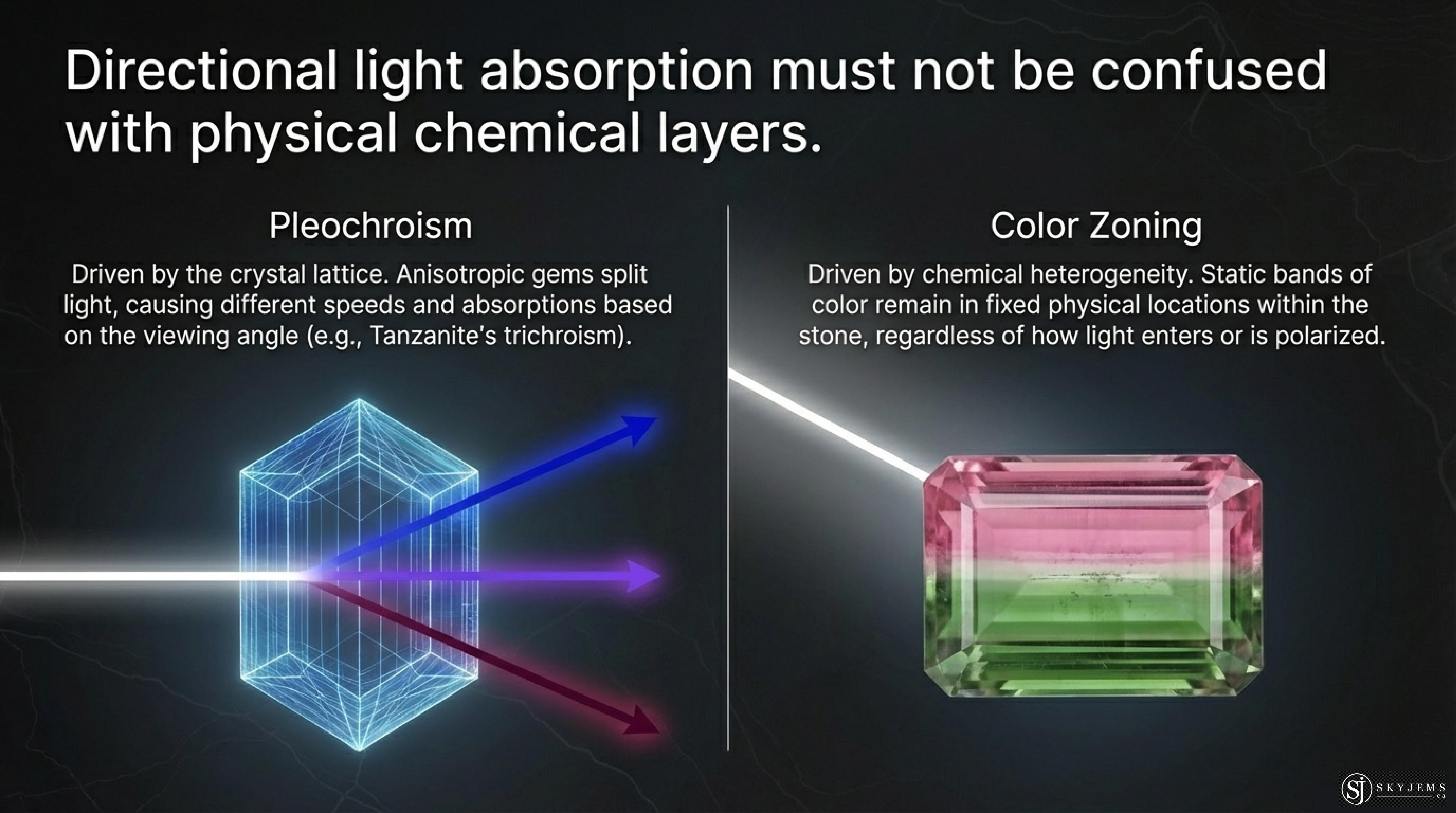
Growth Structures: The Rings of a Crystal
Just as a tree records its history in growth rings, crystals record their formation environments in internal growth structures. For example, under advanced imaging systems like the DiamondView, CVD-grown synthetic diamonds frequently display distinctive striations that are typical of their layer-by-layer growth process. These parallel planes often exhibit different levels of fluorescence compared to the bulk of the crystal, making the artificial internal architecture obvious to a trained gemologist.
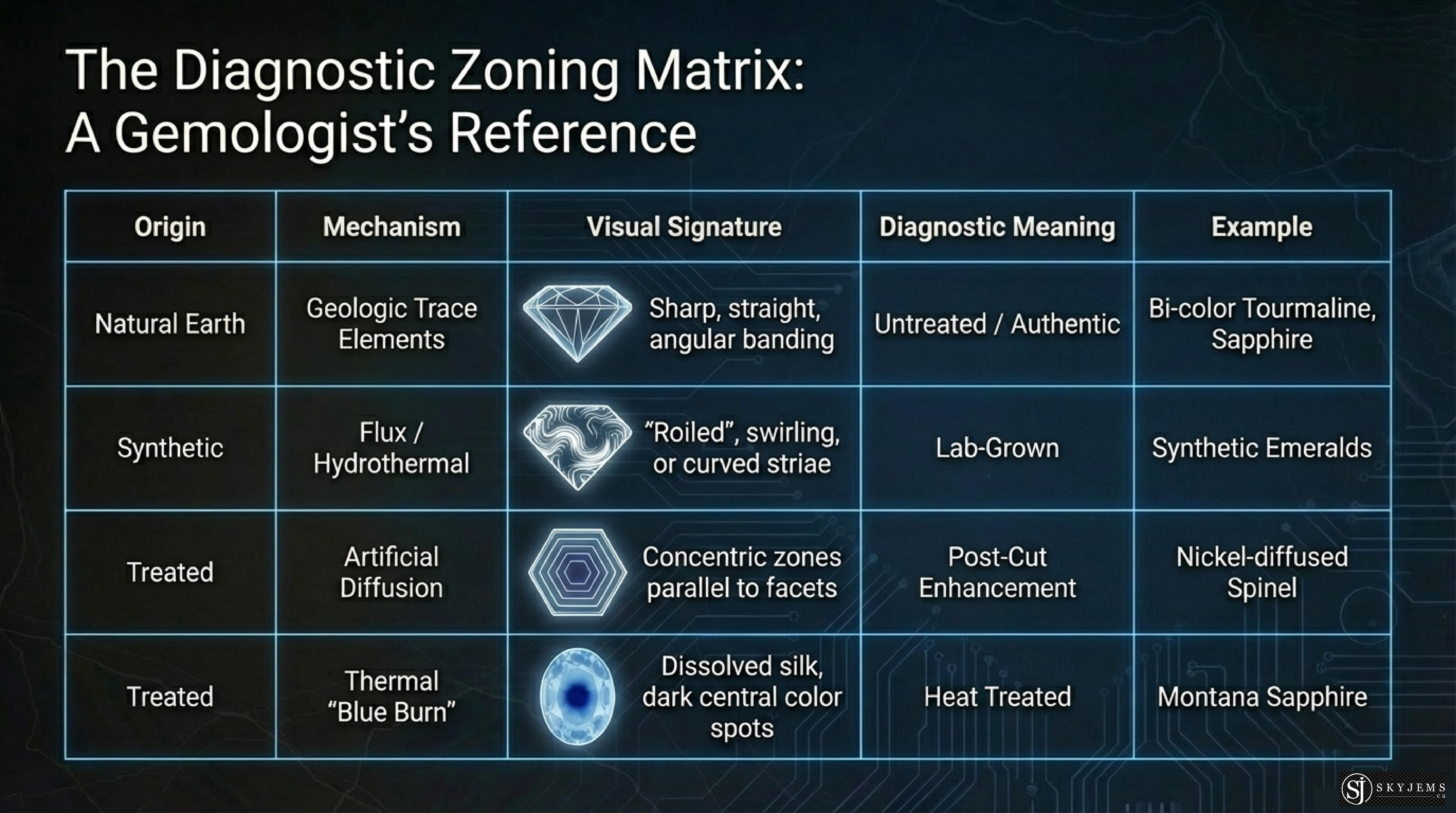
Nanotextures and Optical Magic
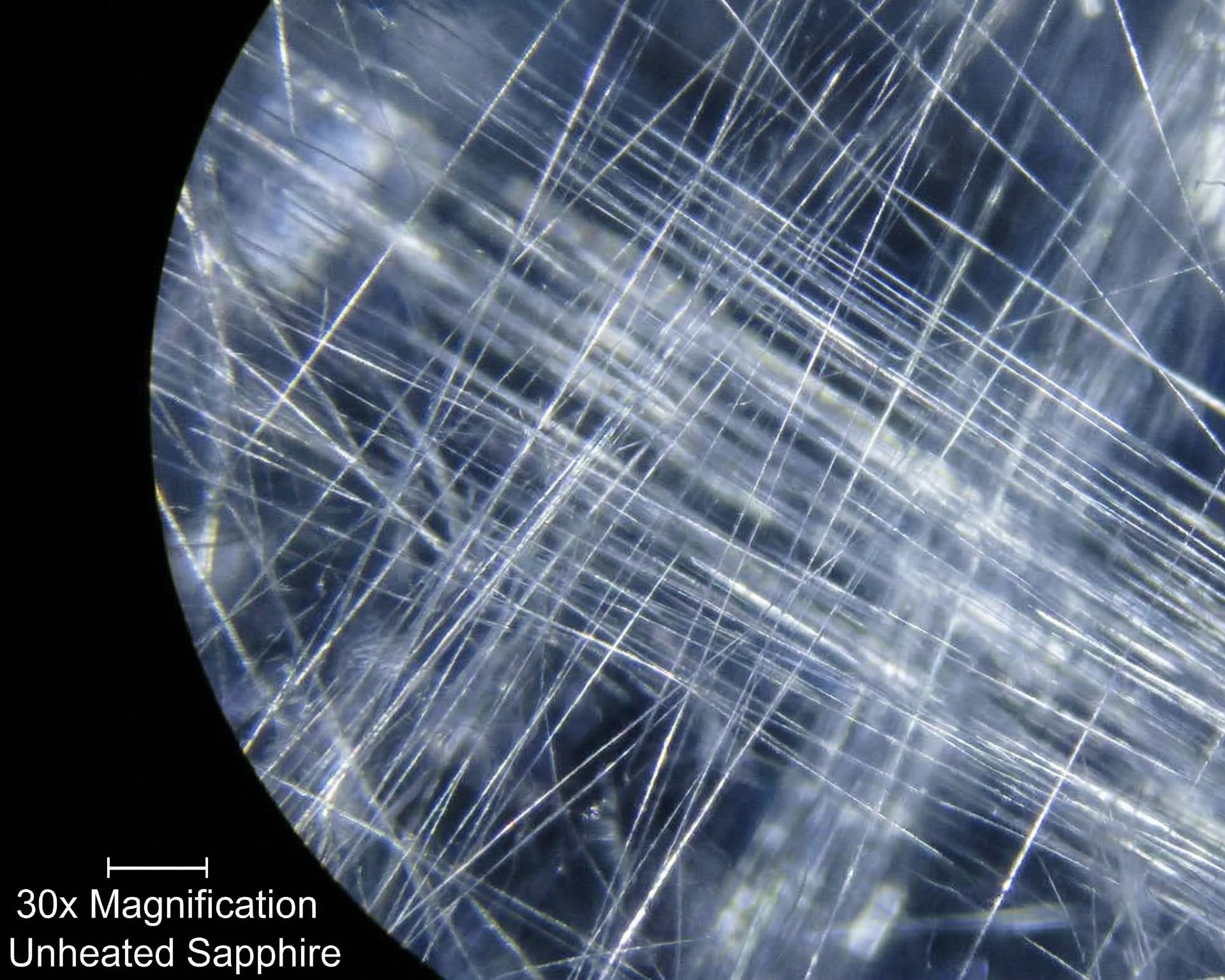
Internal architecture is not limited to large defects or inclusions; it extends down to the submicron level. The incredible optical effects seen in phenomenal gemstones—such as opalescence, chatoyancy (cat's-eye), asterism (stars), schiller, and iridescence—are directly caused by their underlying nanotextures. By investigating these submicron inclusions and structural arrangements, gemologists can uncover the precise mechanisms behind the spectacular visual magic of phenomenal gems.
These nanotexture phenomena can be observed across a range of precious stones, including rubies, emeralds, alexandrites, spinels, and tourmalines—each with its own distinctive internal fingerprint.
Watch the Video Series
Three short films decoding the architecture of light, the science of authentication, and the lapidary's craft.
I · The Architecture of Light
II · Natural, Synthetic, or Treated?
III · The Lapidary's Dilemma
Interactive Knowledge Check
Click the questions below to reveal how gemologists decode internal architecture.
By rendering the 3D structure of a diamond, scientists can rotate the image and gain unprecedented resolution of internal growth patterns and defects. Because lab-grown diamonds (like HPHT and CVD) form under radically different conditions than natural diamonds, 3D visualization exposes their distinctive, artificial structural architectures.
Under specialized fluorescence imaging (like the DiamondView), CVD synthetic diamonds often show parallel striations that reflect their artificial, layer-by-layer growth process.
These optical effects are actually a trick of the gem's internal architecture! Phenomena like asterism, chatoyancy, and iridescence are caused by highly specific nanotextures and submicron inclusions interacting with light inside the crystal. Stones such as rubies, tsavorites, and demantoid garnets each display these effects in their own characteristic way.

Leave a comment
This site is protected by hCaptcha and the hCaptcha Privacy Policy and Terms of Service apply.