
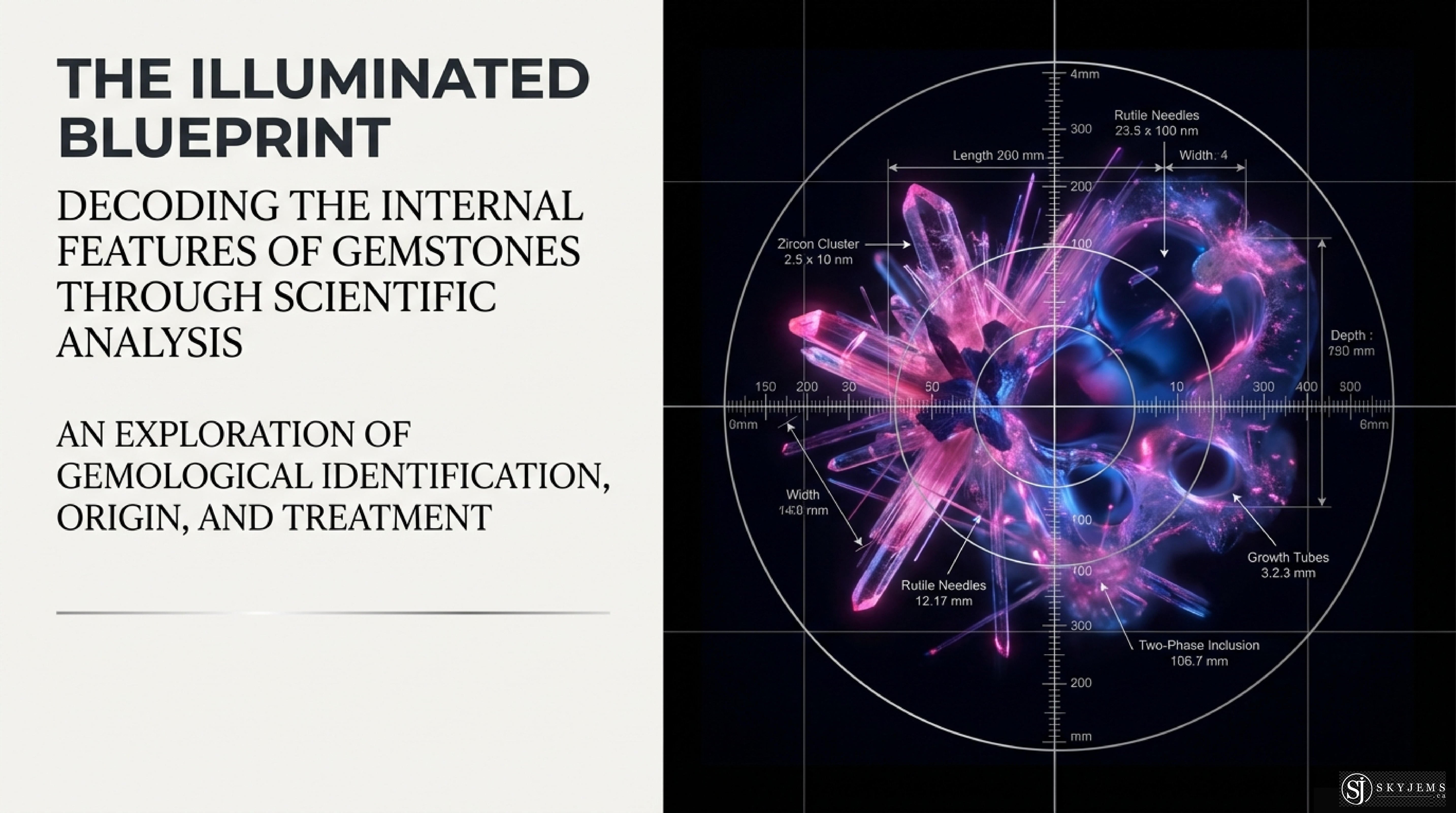
When evaluating a gemstone, many buyers immediately look for absolute perfection. However, to a gemologist, a completely flawless stone can sometimes be a mystery lacking a story. Gem inclusions—mineral crystals, structural defects, or cavities filled with fluid and gas—act as microscopic time capsules that reveal the deep geological origins of the host material.
While standard consumer knowledge often dismisses inclusions as clarity-reducing "flaws," the scientific reality is that these internal features are invaluable diagnostic tools. Furthermore, fortuitous geological processes often shape these inclusions into breathtaking visual works of natural art, completely untouched by human intervention. Let's decode the secret language of the micro-world.
1. The Solid, Liquid, and Gas Phases
Inclusions can exist in multiple states of matter, and their specific phases tell us exactly how a gem formed:
- Mineral (Solid) Inclusions: These are solid crystals trapped within the host gem. They range from microscopic specks to large, eye-visible features. For example, Russian demantoid garnets are highly prized specifically for their "horsetail" inclusions, which are radiating clusters of fibrous chrysotile. In exceptionally rare cases, diamonds have been found to host crystalline hematite inclusions precipitated deep within the earth.
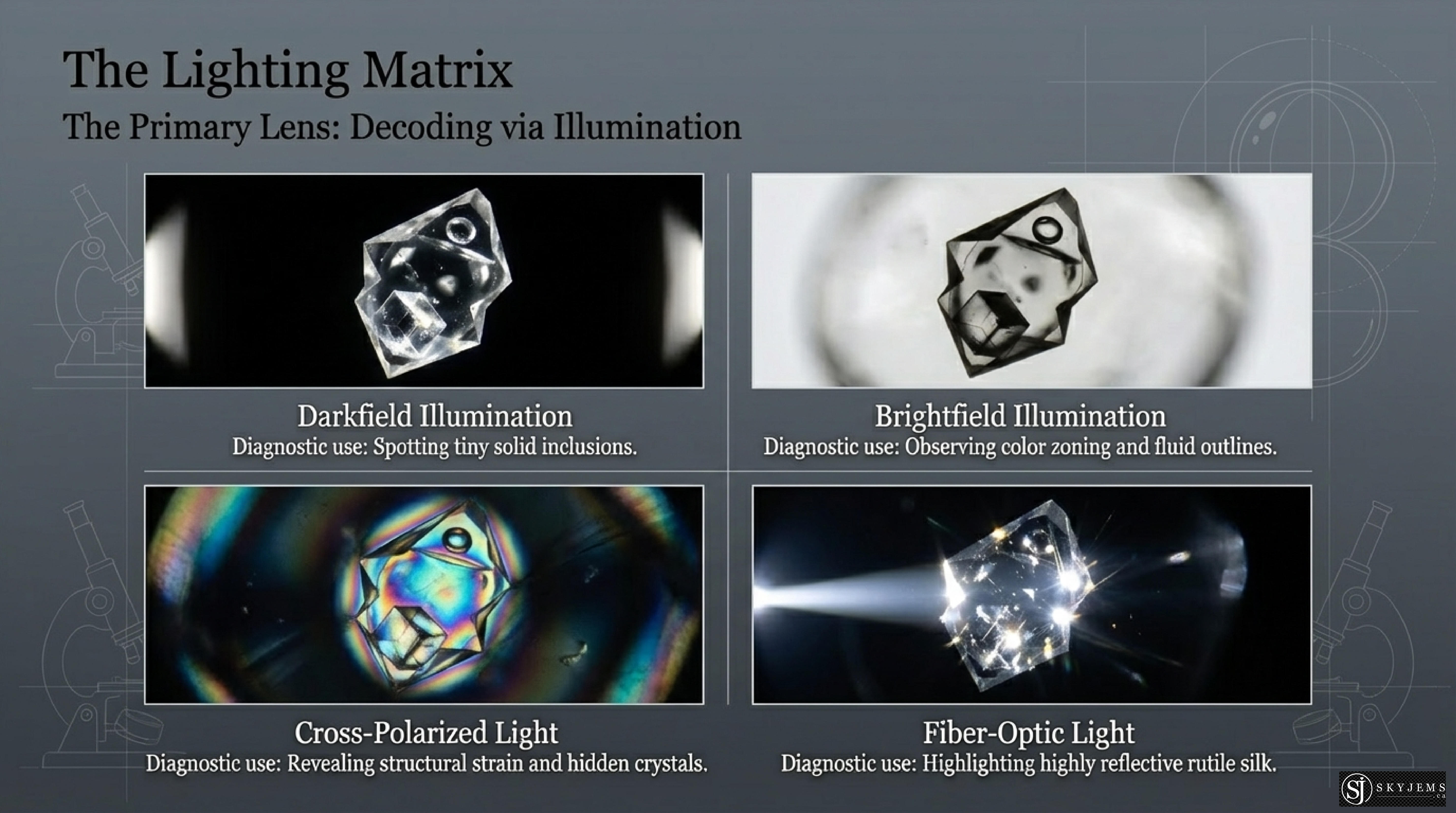
- Fluid and Gas Inclusions: Cavities trapped within a stone can contain aqueous liquids, liquid carbon dioxide, or even unmixed gases. A classic example is the "three-phase" inclusion—containing a liquid, a gas bubble, and a solid cubic crystal—which is a primary hallmark for determining the geographic origin of Colombian emeralds.
2. Growth Marks and Healed Fissures
A crystal's growth is rarely uninterrupted. As a gemstone forms or repairs itself after fracturing, it leaves behind distinctive structural patterns:
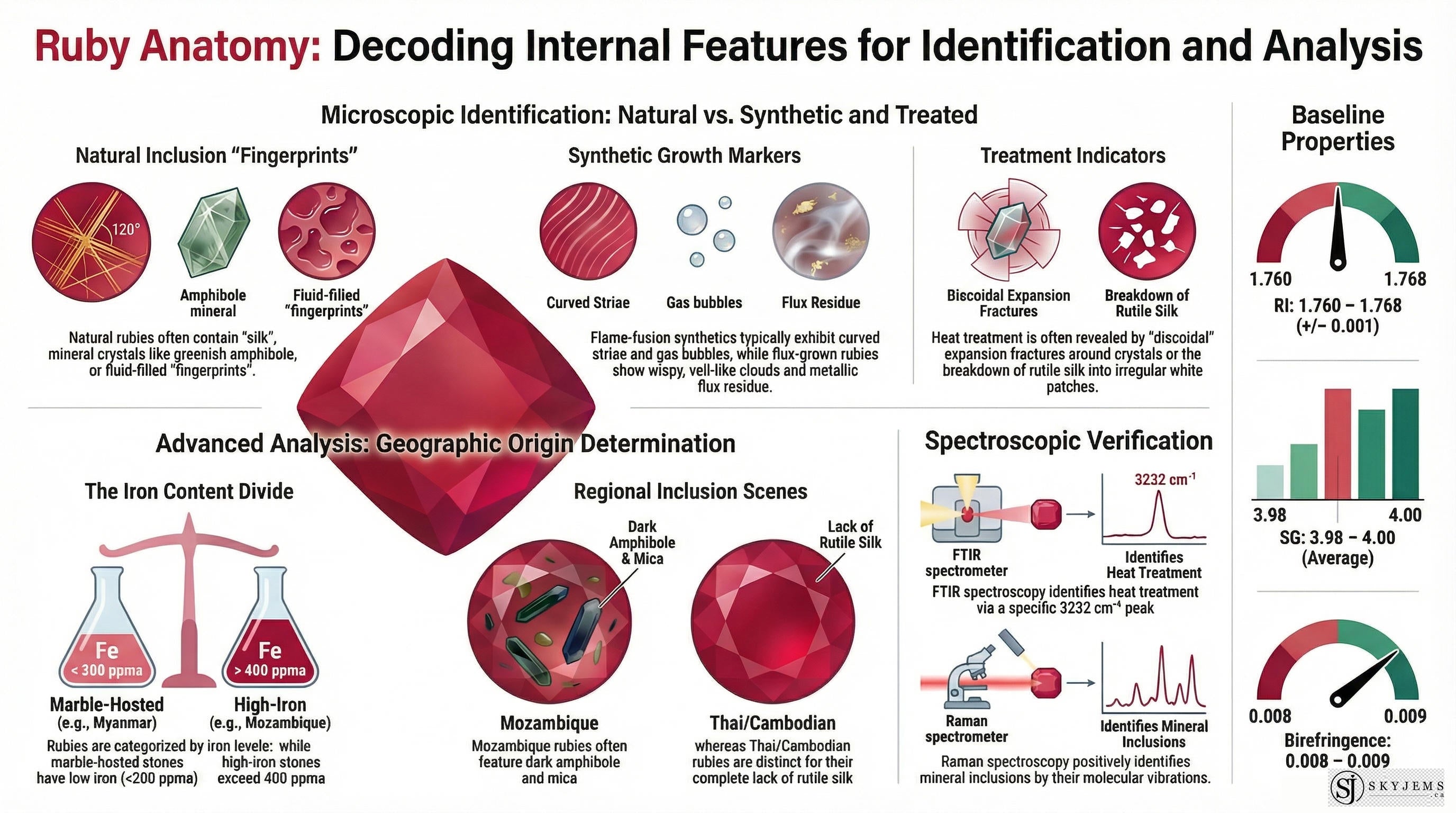
- Fingerprints: When a crystal fractures in a fluid-rich geological environment, the break draws in surrounding fluids. As the stone heals, the fluid gets trapped in an interconnected network of microscopic cavities that visually resembles a human fingerprint.
- Nail-Head Spicules: These are tapered voids often capped by a flat crystal. Traditionally associated with rapid or disturbed growth, nail-head spicules are fascinating because they can be found in both natural gems and synthetic materials, requiring careful analysis to interpret.
3. The Ultimate Detectives: Spotting Treatments and Synthetics
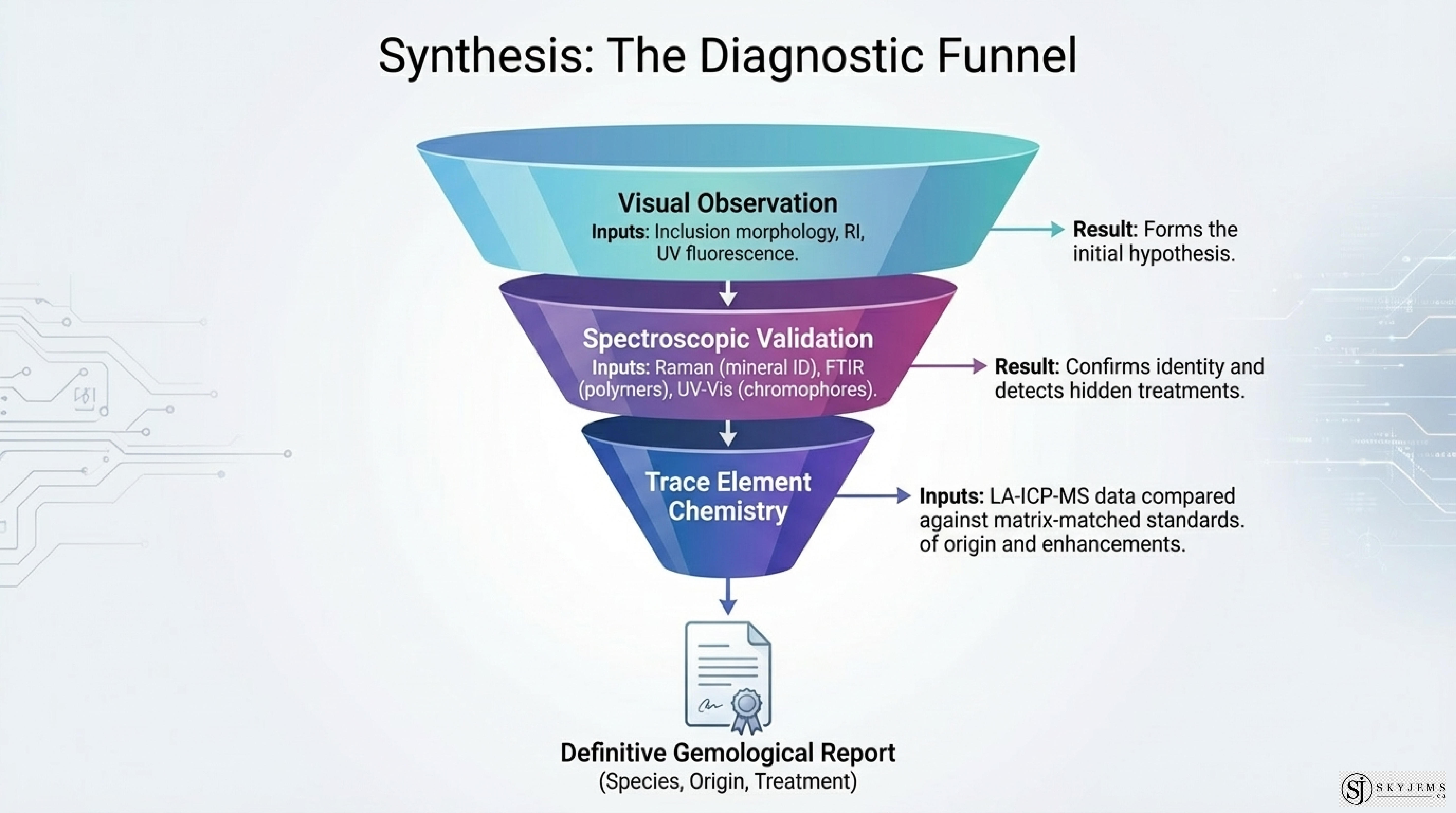
Because inclusions mirror their exact geological conditions, they are the definitive tool for separating natural earth-mined gems from synthetics and treated stones:
- Identifying Synthetics: Laboratory-grown stones lack the complex mineral suites found in nature. For instance, High-Pressure, High-Temperature (HPHT) synthetic diamonds frequently contain irregular, dark pieces of solidified metallic flux from the growth chamber, which can even cause the diamond to be magnetically attractive.
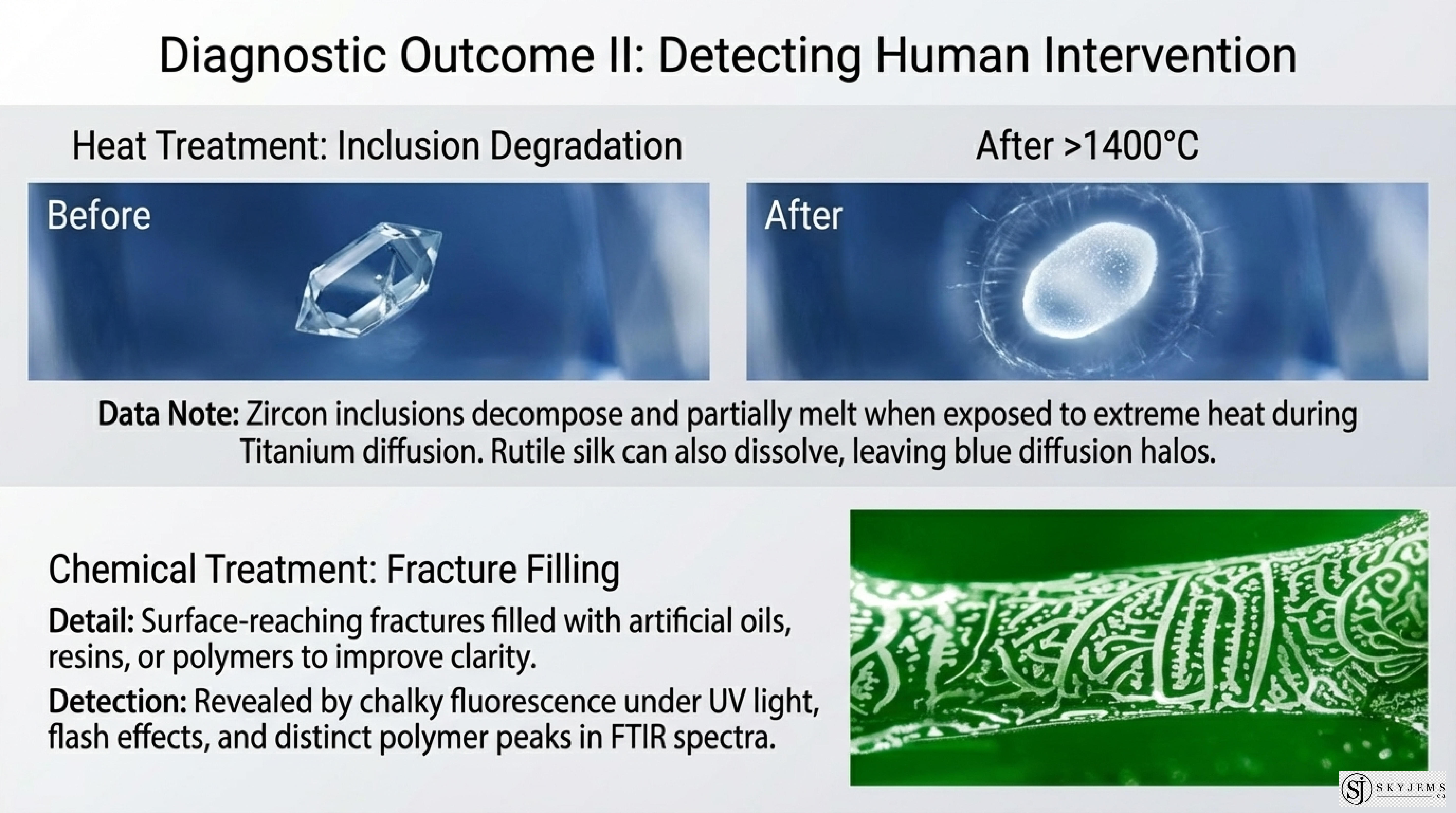
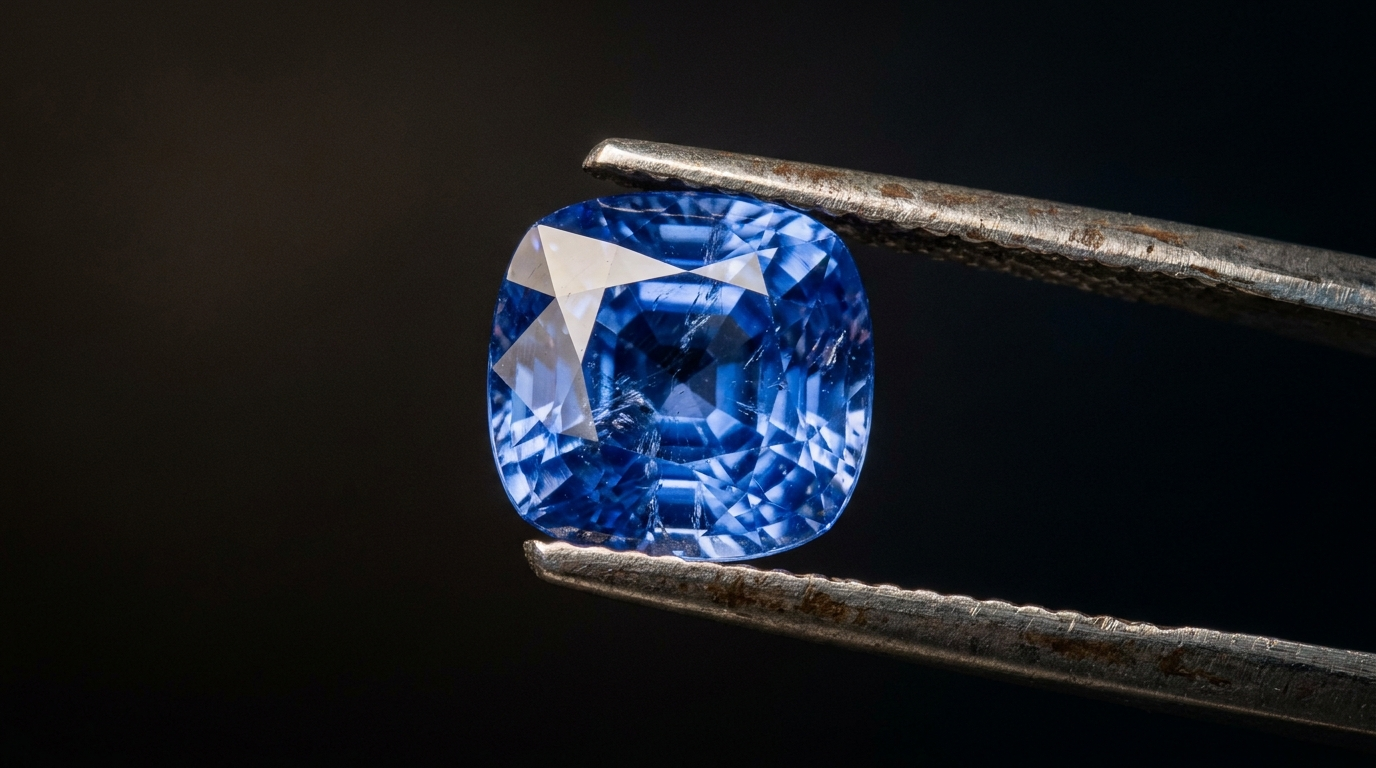
- Detecting Clarity Enhancements: Treaters often inject fractures with glass or epoxy resins to improve a stone's apparent clarity. Gemologists decode this by looking for the "flash effect"—vivid flashes of color, such as subtle blue and pale purple, visible along the filled breaks when viewed at certain angles.
- Proving Natural Color (Unheated): Heat treatments are routinely used to improve gem color, but the extreme temperatures alter internal inclusions. The presence of pristine, unruptured carbonate minerals or intact fluid CO2 inclusions provides definitive proof that a gemstone has not been artificially heated.
4. When Inclusions Create the Magic
In some cases, a gemstone's entire identity and value depend entirely on its inclusions. Without them, phenomenal optical effects would not exist. The precise alignment of microscopic needles (like rutile) creates highly coveted optical phenomena, such as the sharp band of light in chatoyancy (cat's-eye) or the intersecting rays of asterism (stars).

26.92ct Star Sapphire — Sri Lanka
View Star Sapphires

3.06ct Cat's Eye Chrysoberyl
View Cat's Eye Collection

8.12ct Star Ruby — Vietnam, Unheated
View Star Rubies

17.72ct Blue Star Sapphire — Sri Lanka, Unheated
View Star Sapphires
The next time you examine a coloured stone or a diamond under a loupe, don't just look for what is missing. Look at what is trapped inside. By decoding gemstone inclusions, we uncover the geographic origins, authenticity, and hidden beauty of the rarest treasures on Earth.
Watch the Video Series
Three short films decoding the universe within every natural gemstone. The finale of the Skyjems series.
I · The Illuminated Blueprint
II · The Geometry of Light
III · The Universe Within (Series Finale)

Leave a comment
This site is protected by hCaptcha and the hCaptcha Privacy Policy and Terms of Service apply.