
The Quiet Record: What Coloured Gemstones Actually Returned Over 25 Years
A side-by-side comparison of gemstones, gold, the S&P 500, and Bitcoin — and the allocation rule every serious collector should know.
You can quote the S&P 500's 25-year return to the decimal. Most investors can. Now name the 25-year return on coloured gemstones.
Silence.
That silence is not a reflection of performance. It is a reflection of attention — and it is costing you.
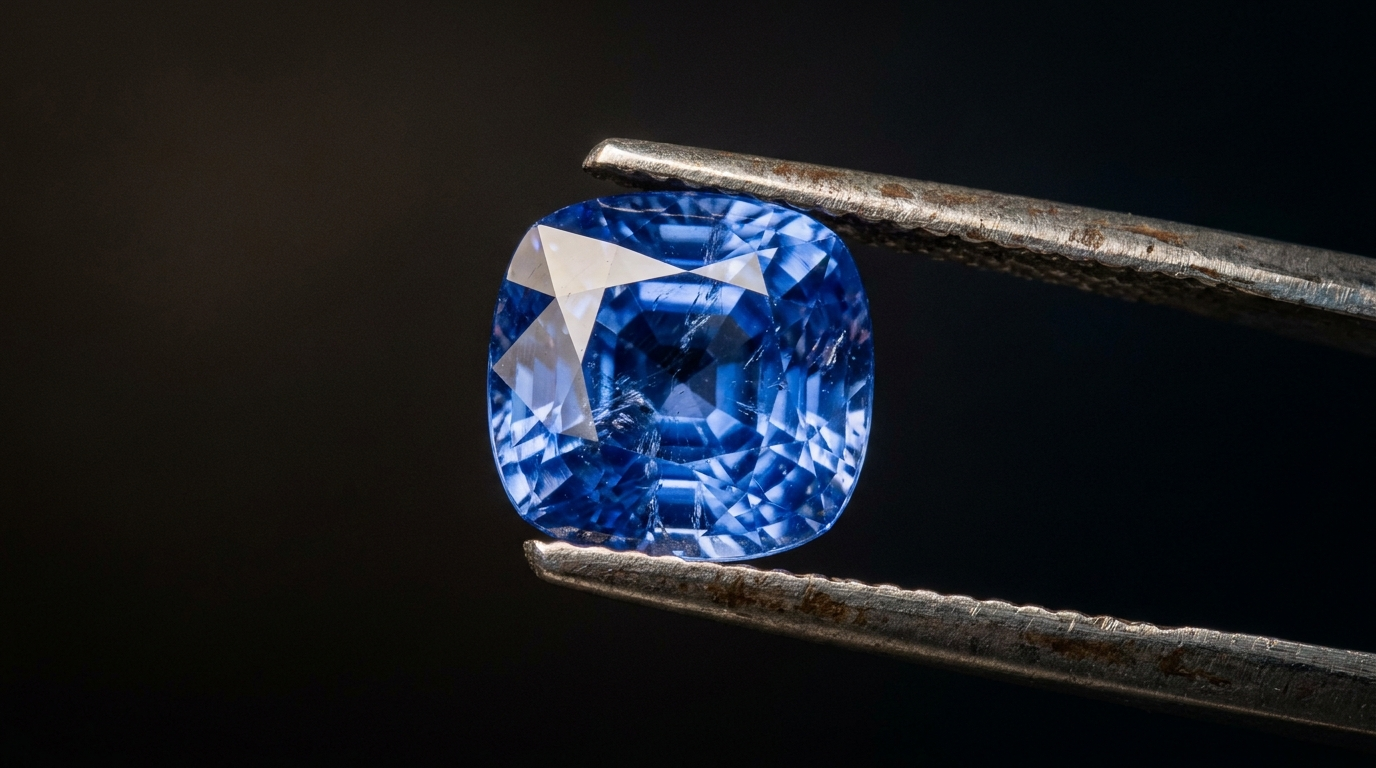
Between 2000 and 2025, dealer-price indices tracking documented, standard-treatment coloured gemstones — fine heated Ceylon sapphire, Zambian emerald, Mahenge spinel, Paraíba tourmaline, Afghani and Tajik ruby — show average annual appreciation in the high single digits at the fine-investment tier. Over the same period, gold compounded at roughly 8% per year. The S&P 500, dividends reinvested, compounded at roughly 7%. Bitcoin delivered extraordinary nominal returns with drawdowns that would have ended most careers.
The gemstone record shows something none of the others can claim: appreciation without systemic loss events. No stone in a properly documented basket ever went to zero. No auction week closed with a flash crash. No custodian froze withdrawals. The carrying cost was a safe and an insurance rider. Not a margin call.
These are structural characteristics. Not luck.
Why the record is what it is
Three forces have shaped this market over two decades. Each one is accelerating.
Supply is finite and shrinking. The legendary deposits — Kashmir, Mogok, Muzo — stopped producing decades ago. Today's stones come from smaller, artisanal sources: Sri Lanka, Madagascar, Zambia, Mahenge in Tanzania, the Jegdalek mines in Afghanistan, the Pamir range in Tajikistan. Even these are sporadic and geologically constrained. New supply does not materialise because someone raises capital. It materialises because the earth formed it 50 million years ago — or it does not materialise at all.
Demand has moved east and up-market. The newly affluent in China, India, and the United Arab Emirates were never exposed to the 20th-century Western diamond narrative. They return to historical cultural affinities for coloured stones. That capital competes for the same finite supply.
Documentation has caught up with the collector. GIA, GRS, AGL, and Gübelin origin reports transformed "fine coloured gemstone" from an art-world judgement call into something a first-time collector can price, insure, consign, and transfer. Once species, origin, treatment status, carat weight, and proportions are documented, the stone trades like an asset — because it is one.
The allocation rule
You do not need a curator's eye or a seven-figure portfolio to begin. You need a rule and the discipline to follow it.
Allocate at least 20% of your total portfolio to hard assets. Of that, 50% physical precious metals, 50% coloured gemstones. Acquire at regular intervals — monthly or quarterly — like an RRSP contribution. Not in lump sums.
On a $1 million portfolio, that means $100,000 deployed gradually into physical metals and $100,000 into documented gemstones. On a $250,000 portfolio, $25,000 in each — two or three quality acquisitions over a year. The interval discipline matters: it smooths price fluctuations and gives you time to develop an eye.
This is not a novel idea. It is what merchant families have practised across generations. It is what Skyjems has done since 1967.
What this dossier contains
The full dossier (available on request, linked below) walks through the 25-year record stone by stone, the trade data underpinning the basket, realistic entry tiers, and a one-page allocation worksheet. It is a reference document. Read it once when you begin. Return to it each time you add to your collection.
If you would prefer to review the allocation framework privately against your existing holdings, that conversation begins below.
---
Build Your Hard Asset Basket Now →
skyjems.ca/collections/the-performance-basket
(Primary — self-serve acquisition path)
Prefer to read first? Download the Performance Dossier →
18 pages. Emailed on request.
(Secondary — blog and PDF surfaces only)
Acquiring over $50K? Request a private viewing →
David Saad, third-generation curator. By appointment.
(Tertiary — high-ticket inquiries only)
---
Watch the full 3:30 analysis
The 20-second version

Written by David Saad

Leave a comment
This site is protected by hCaptcha and the hCaptcha Privacy Policy and Terms of Service apply.