
The Collector's Allocation: Why the First Stone Is the Most Expensive
A three-part discipline for building a gemstone position — and how to avoid the tuition of a single, irreversible acquisition.
The first stone is the most expensive one you will ever acquire.
Not because it costs more. Because it teaches you what you should have bought instead. Three months of research. One cheque. Six months later, the market confirms what experience would have told you earlier. The position is locked. The lesson is paid for.
There is a quieter way. It does not require waiting for a Kashmir sapphire to surface at a regional auction. It does not depend on conviction. It depends on discipline.
It is called a schedule.
---
The Rule in Three Parts
Part 1. Allocate at least twenty per cent of your total portfolio to hard assets.
Part 2. Within that allocation, split evenly: fifty per cent physical precious metals, fifty per cent coloured gemstones.
Part 3. Acquire at regular intervals — quarterly, on a fixed cadence. Not as a lump sum. Not when you "see something."
Three rules. No exceptions.
---
Why Interval Contributions Matter More in Gemstones Than in Equities
Equity investors understand dollar-cost averaging: steady contributions smooth the volatility of a liquid, exchange-traded market. The logic applies to gemstones — but for a different reason.
Gemstones are illiquid and heterogeneous. There is no single price for "a heated Ceylon sapphire." There is a range for fine heated Ceylon sapphires at a given carat weight, and the stone before you sits somewhere within that range. The only way to develop a reliable sense of where is to examine many of them. Over time. In person.
A quarterly acquisition schedule enforces exactly that process. Each acquisition is also a calibration event. By the third, you are no longer guessing; you are negotiating. By the sixth, your eye is tuned to the species and quality tier your collection favours. By the tenth, your position has both depth and discernment.
A lump-sum deployment skips every stage. It accepts the curator's first impression, at the first price, without the benefit of comparison.
---
What a Quarterly Schedule Looks Like
Consider a portfolio of $250,000. The 20 / 50-50 rule yields a $25,000 gemstone allocation. Deployed quarterly, that is approximately $6,250 per acquisition — four acquisitions in twelve months. A reasonable starter cadence:
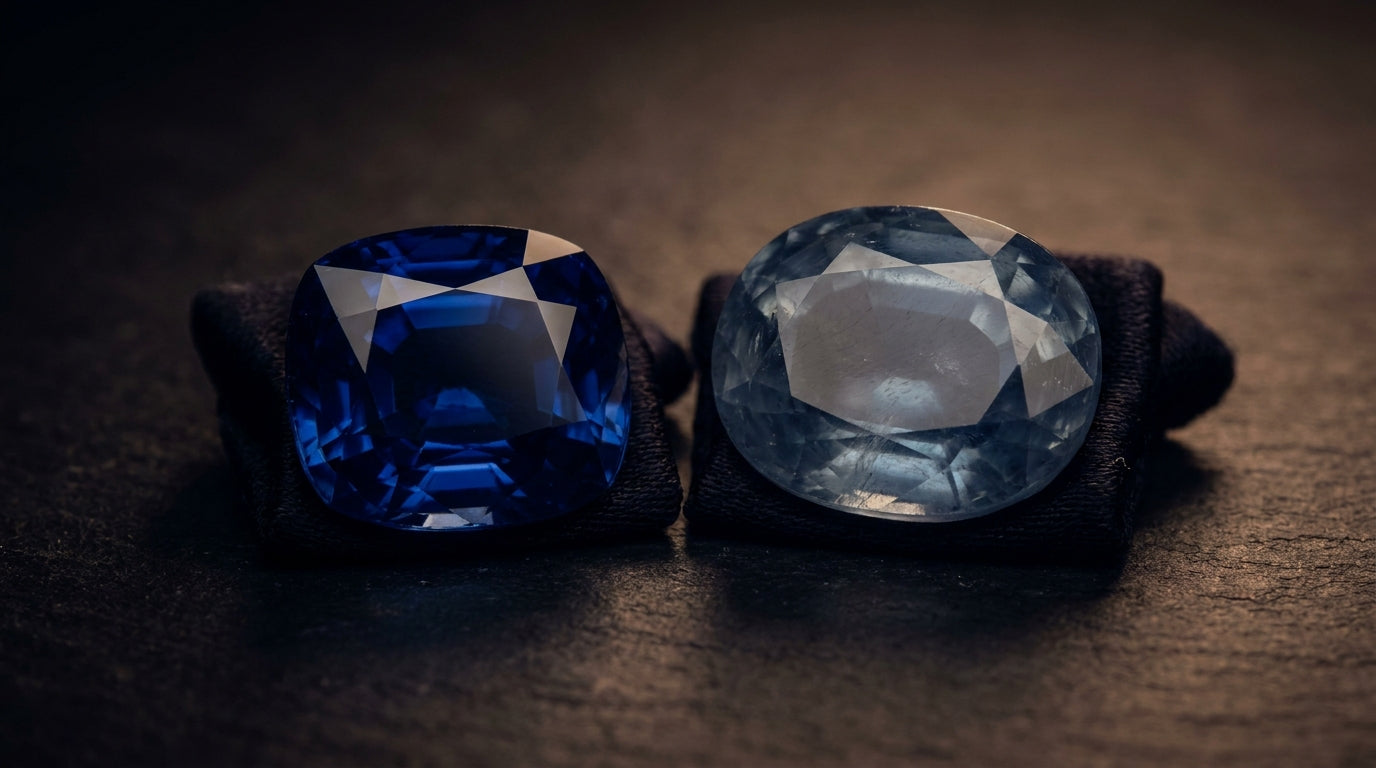
- Q1 — A finely heated Ceylon sapphire in the 2–3 ct range
- Q2 — A Mahenge spinel at a similar price point
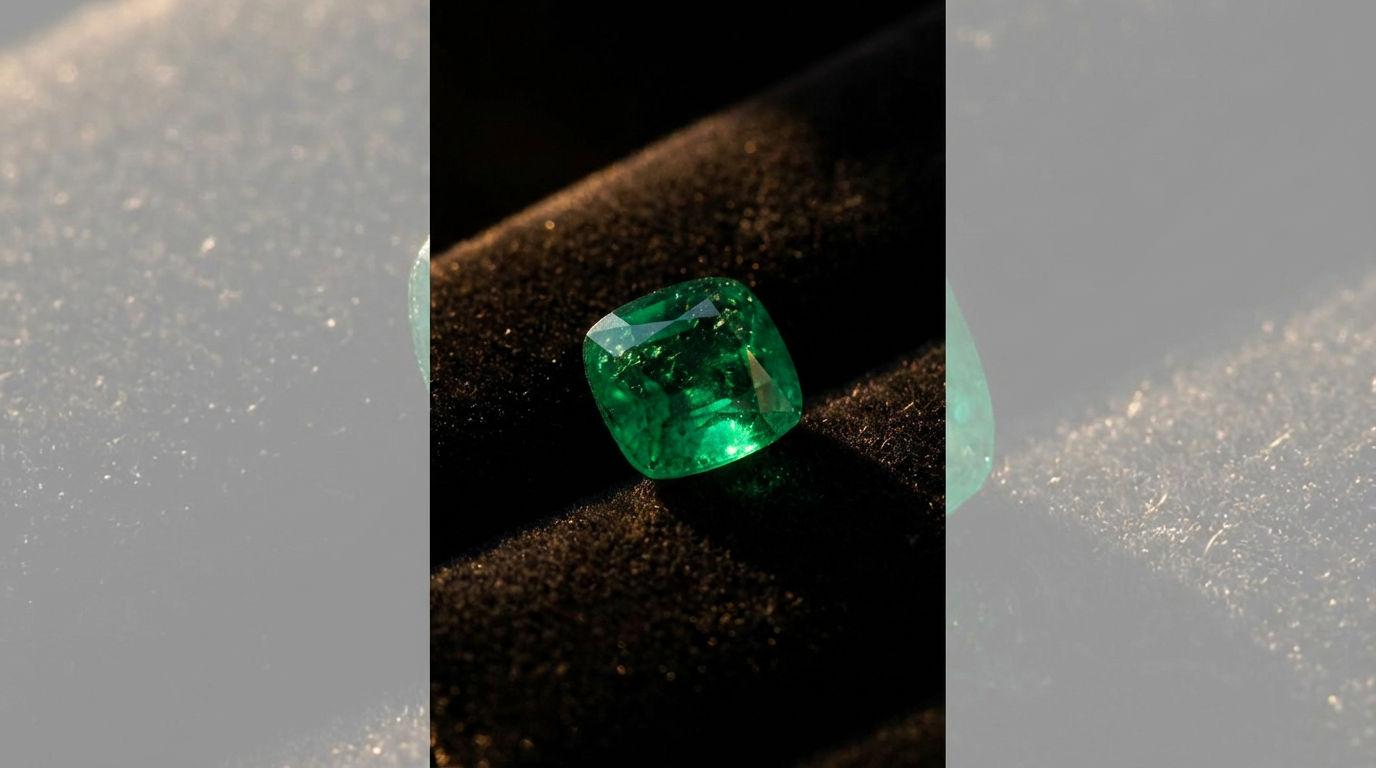
- Q3 — A fine Zambian emerald with moderate oiling
- Q4 — A Paraiba tourmaline in a smaller size tier, or a second sapphire at a different origin
Four stones. Four species. Four treatment profiles. Four distinct encounters with the market. After twelve months, you possess not a single stone but a basket — geographically diversified, species-diversified, and capable of being liquidated in parts rather than all at once.
In year two, you deepen positions you now understand rather than chasing unfamiliar species. By year three, you may begin to consider origin-premium stones — an unheated Ceylon sapphire, a higher-tier Paraiba — guided by a genuinely calibrated eye.
---
Even-Weighting Protects New Collectors
Experienced collectors concentrate positions. They know which species, origins, and treatments they favour. That conviction is earned over years.
For newcomers, even-weighting across the basket guards against the most common early error: over-indexing on a single species before confirming its fit within the collection.
Three of the five stones in the Performance Basket — heated Ceylon sapphire, Zambian emerald, Mahenge spinel — are deliberately chosen because they occupy distinct positions in the collector market. Ceylon sapphire has the broadest buyer market. Zambian emerald has the fastest-growing one. Mahenge spinel has the most asymmetric upside. Owning all three teaches how each behaves at exit. Owning only one teaches very little.
---
The Performance Basket Enables This Strategy
Every stone in the Performance Basket sits at an entry tier suitable for quarterly acquisitions across portfolios from $25,000 to $500,000. None require a single large cheque. All carry full documentation with complete treatment disclosure.
Skyjems has curated coloured gemstones for three generations — since 1967, from the studio at 27 Queen St East, Suite 1011, Toronto. David Saad, third-generation curator, examines every stone before it reaches a client. The Archive holds over 7,500 certified loose stones and finished pieces.
The schedule is the strategy. The basket is the curated collection that makes it executable.
---
- Build Your Hard Asset Basket Now → skyjems.ca/collections/the-performance-basket (PRIMARY)
- Prefer to read first? Download the Dossier → 16-page PDF (SECONDARY — blog and PDF only)
- Acquiring over $50K? Book a Private Viewing → (TERTIARY — high-ticket only)
---
Watch the full 3:30 analysis
The 20-second version

Written by David Saad

Leave a comment
This site is protected by hCaptcha and the hCaptcha Privacy Policy and Terms of Service apply.