
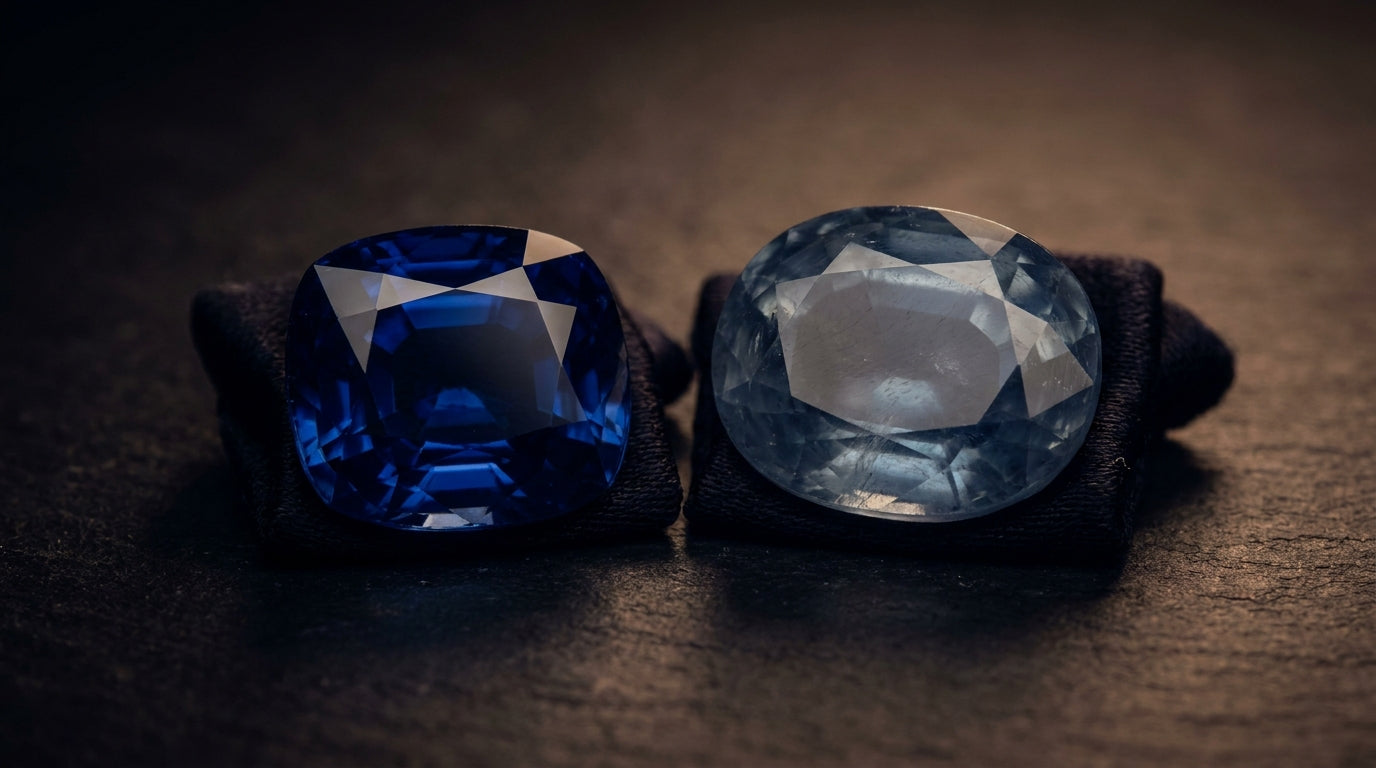
The Treatment Ladder: Why "Untreated Only" Is Not the Investment Line
Industry-standard treatments are disclosed, priced, and accepted by every reputable laboratory on earth. Undisclosed enhancement is fraud. Here is how a serious collector tells the difference.
Heat a fine Ceylon sapphire, and the trade calls it standard practice. Fail to disclose that heating, and the trade calls it fraud.
The distinction is not complicated. But a persistent myth makes it seem so.
That myth runs: "Only unheated, untreated stones are investment-grade. Everything else is compromised." At the apex of the market — where a single Kashmir sapphire commands an eight-figure cheque — this is sound counsel. Nothing but the rarest production on earth will do.
For the serious collector entering the coloured-gemstone market with a $25,000 to $500,000 allocation built over time, the myth is a barrier. It persuades intelligent newcomers that any treated stone is fraudulent. It drives them away from an asset class they could hold with genuine confidence.
The actual standard is precise. It has four parts.
Investment-grade means (a) an independent GIA, GRS, AGL, or Gübelin laboratory report, (b) full disclosure of any treatments applied, (c) treatment within industry-standard norms for the species, and (d) pricing consistent with that treatment status.
A finely heated Ceylon sapphire, acquired at the heated-Ceylon price, is investment-grade.
The same stone misrepresented as "unheated Kashmir" is fraud.
The line is documentation. The line is transparent pricing. Not the presence or absence of heat.
---
Every species has an industry-standard treatment practice
The global coloured-gemstone trade has, over decades, converged on accepted enhancements for each species. These treatments are published in GIA literature, disclosed on every reputable laboratory report, and reflected in pricing. A collector unfamiliar with them is simply not yet informed. That is what this dossier corrects.
Here is the ladder, species by species.
Sapphire. Approximately 95% of commercial sapphires on the world market are heated to stabilise colour and dissolve internal silk. Heat treatment is industry-standard, permanent, and fully disclosed on GIA reports. A finely heated Sri Lankan, Madagascan, or Australian sapphire, priced in its proper tier, is a sound acquisition. Unheated sapphires command a premium — often 3× to 10× per carat for comparable colour — because they are statistically rare, not because heated stones are inferior.
Ruby. The pattern mirrors sapphire. Heat treatment and low-residue flux healing are industry-accepted for Burmese and Mozambican production, among other origins. Non-standard treatments — HPHT enhancement, glass filling of fissures — are disclosed explicitly on laboratory reports and trade at a steep discount. Within the documented-heated tier, Afghan (Jegdalek) and Tajik (Pamir) marble-hosted rubies represent the accessible entry point for glowing-red material with documented provenance.
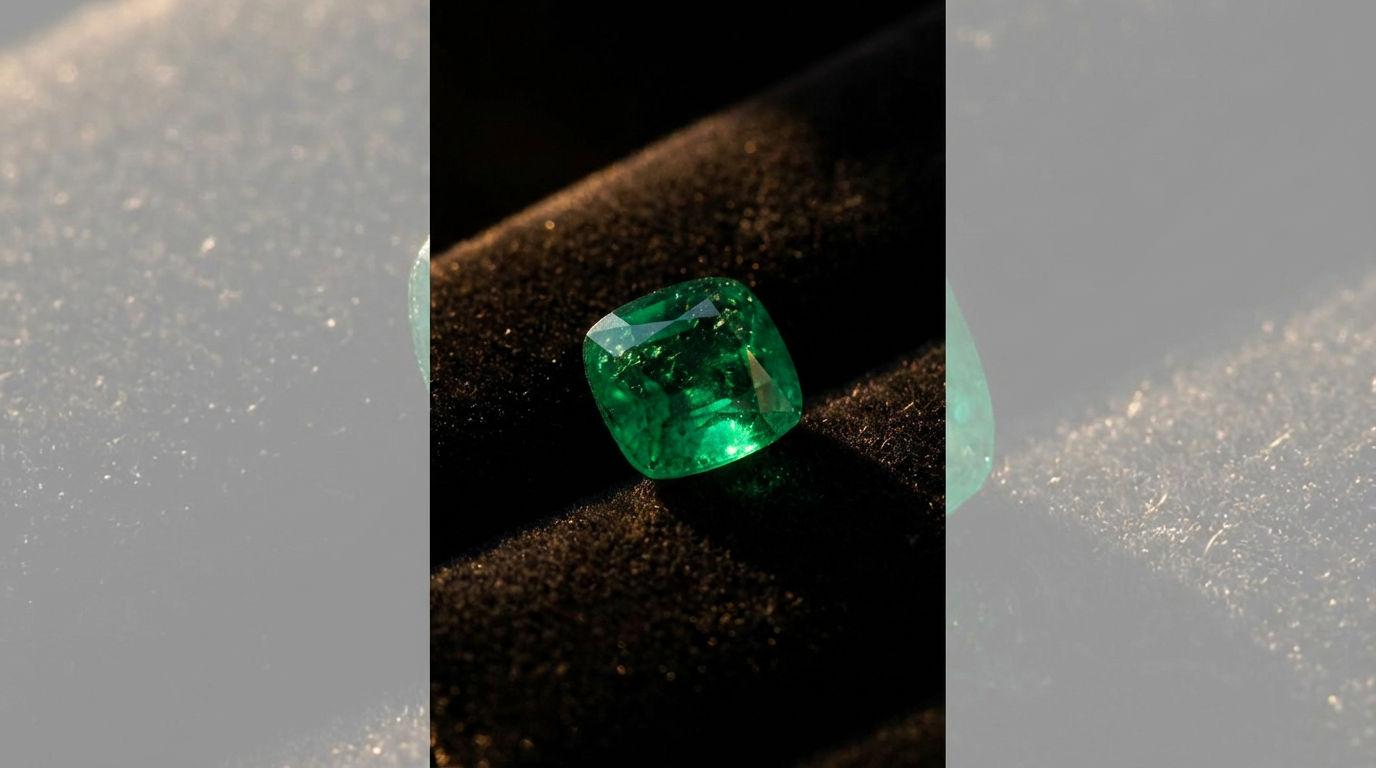
Emerald. Oiling is the norm. The vast majority of fine Colombian and Zambian emeralds are oiled with colourless cedarwood oil or comparable natural fillers to improve apparent clarity. GIA reports disclose this as minor, moderate, or significant clarity enhancement. Untreated emeralds exist but are statistically rare. Moderately oiled, top-colour Zambian emeralds are an established investment-grade category.
Spinel. Rarely treated. Mahenge, Jedi, and Mogok spinels are almost always sold with no enhancement whatsoever. No industry-standard treatment exists for the species. A GIA report confirming "No indications of heating" is the baseline expectation for spinel — not a premium signal.
Tourmaline. Paraiba, rubellite, watermelon, and chrome tourmalines are nearly universally heated to improve colour. Standard. Disclosed. The category is heat-treatment-normalised.
Tanzanite. Virtually 100% of commercial tanzanite is heat-treated from its original brownish-zoisite colour to the deep blue-violet the market recognises. This is so standard that unheated tanzanite is effectively a curiosity rather than a premium category.
---
The lab-grown threshold
Treatment transparency also serves as the first line of defence against a more consequential challenge: lab-grown commoditisation.
Lab-grown diamonds have dropped an estimated 70–80% in wholesale per-carat price since 2018 as production scaled. Lab-grown rubies, sapphires, and emeralds exist today. The trade expects them to follow a comparable trajectory as synthesis technology matures.
What a laboratory cannot replicate is geological origin.
A heated Ceylon sapphire with a GIA origin report confirming Sri Lanka is a natural stone with traceable provenance. Its micro-inclusions and trace-element signatures are a fingerprint of the earth — the product of geological processes no growth chamber can compress.
The defensible moat is not "untreated." It is natural formation with documented geological provenance.
For the collector, this is the structural case. Investment-grade coloured gemstones are finite geological artefacts, authenticated by external certificates of origin. A laboratory can produce a chemically identical corundum crystal. It cannot produce the geological record that surrounds a natural stone.
---
What this dossier delivers
The Treatment Ladder Dossier is a reference you keep beside your acquisitions. For the six main investment-grade species, it details:
- Which treatments the industry accepts as standard — and why
- The precise disclosures to expect on GIA, GRS, and AGL reports, line by line
- The non-standard enhancements that disqualify a stone from investment-grade consideration
- The approximate price multiplier between standard-treatment and fully natural grades, where relevant
- Why the lab-grown threshold does not close for natural, documented stones
---
Build Your Hard Asset Basket Now → skyjems.ca/collections/the-performance-basket
Prefer to read first? Download the Treatment Ladder — a 14-page reference document, available via the link below.
---
Watch the full 3:30 analysis
The 20-second version

Written by David Saad

Leave a comment
This site is protected by hCaptcha and the hCaptcha Privacy Policy and Terms of Service apply.