
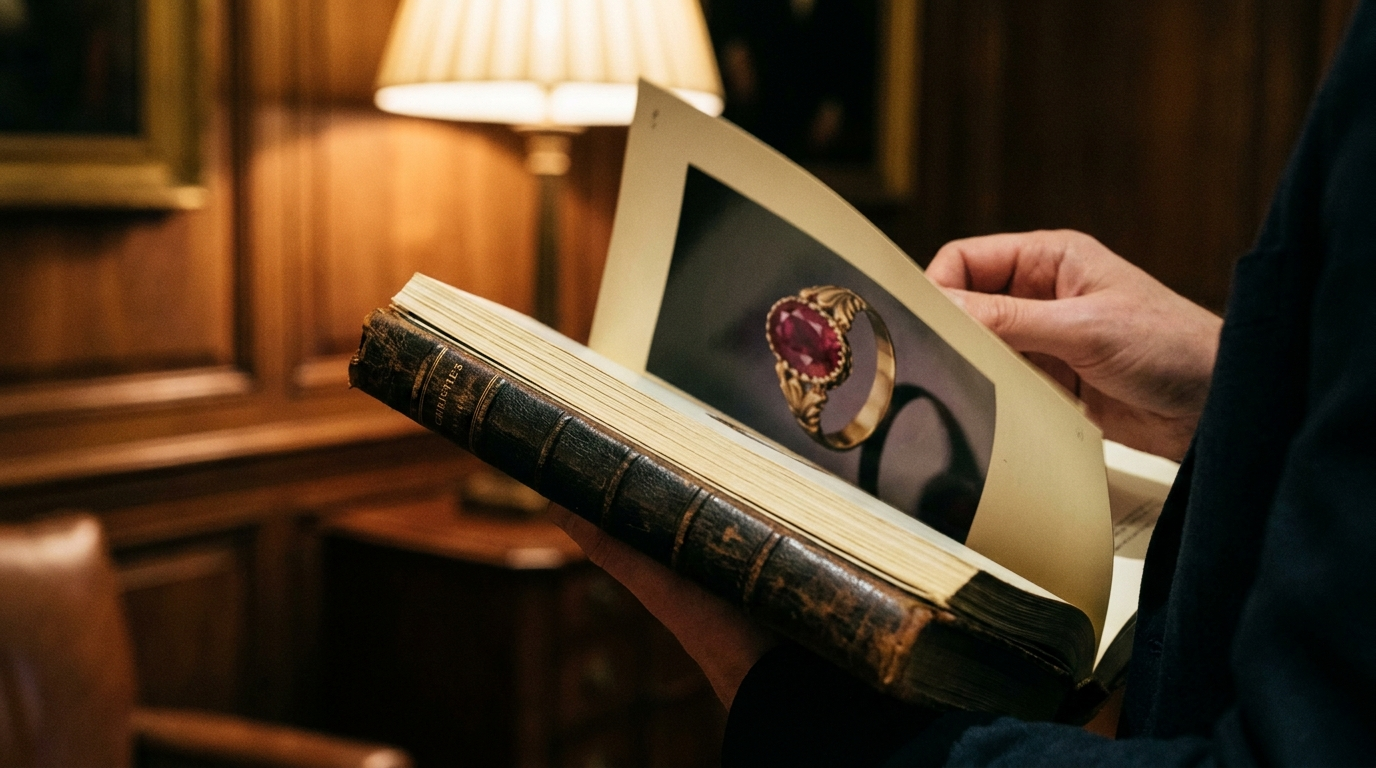
Every Hammer Price Is Permanent: What Twenty-Five Years of Auction Data Reveal About Coloured Gemstones
Five houses. Millions of lots. One pattern the financial press has not yet noticed.
A paddle goes up. A price is struck. The number enters the public record and stays there permanently.
That is how price discovery works at Christie's, Sotheby's, Bonhams, Phillips, and Heritage. No mark-to-model. No index cherry-picking. No quiet revision after the fact. The auction record is the single most honest pricing mechanism in the gemstone world — and what it has shown, consistently, for twenty-five years, is a market repricing itself upward.
Three benchmarks worth sitting with:
In May 2015, Sotheby's Geneva sold the Sunrise Ruby — a 25.59-carat Burmese ruby set in Cartier — for approximately $30.3 million USD, a per-carat record exceeding $1.18 million. That single result — confirmed by laboratory report, disclosed in the catalogue note — was material to the market's recalibration. Burmese rubies of that calibre do not come to market twice in a decade.
In November 2014, Sotheby's Geneva sold the Blue Moon of Josephine, a 12.03-carat fancy-vivid blue diamond, for $48.4 million. That result reset the market's understanding of what rare colour commands at the apex, with immediate ripple effects through sapphire, ruby, and fancy-colour diamond.
Christie's and Sotheby's Hong Kong auctions have seen repeated records over the past decade for Kashmir sapphires, Colombian emeralds, and, increasingly, pigeon's-blood rubies from sources other than Burma — driven by Asian collectors unburdened by twentieth-century Western marketing narratives. Bonhams and Phillips have built specialist coloured-stone sales at the $5K–$250K level — the actual range where a collector building a first position operates — with transparent published results. Heritage Auctions similarly reports comparables down to the $2K range with realised prices.
These are not thinly traded events. Major jewellery and gem sales at the leading houses now routinely realise hundreds of millions of dollars per season. Sell-through rates — the percentage of lots that meet their reserve and actually sell — for fine coloured stones held notably firm through the 2008–09 financial crisis and again through 2020, when equity markets seized up.
Why the auction record matters to the serious collector:
You need not take Skyjems' word on pricing. That is the point.
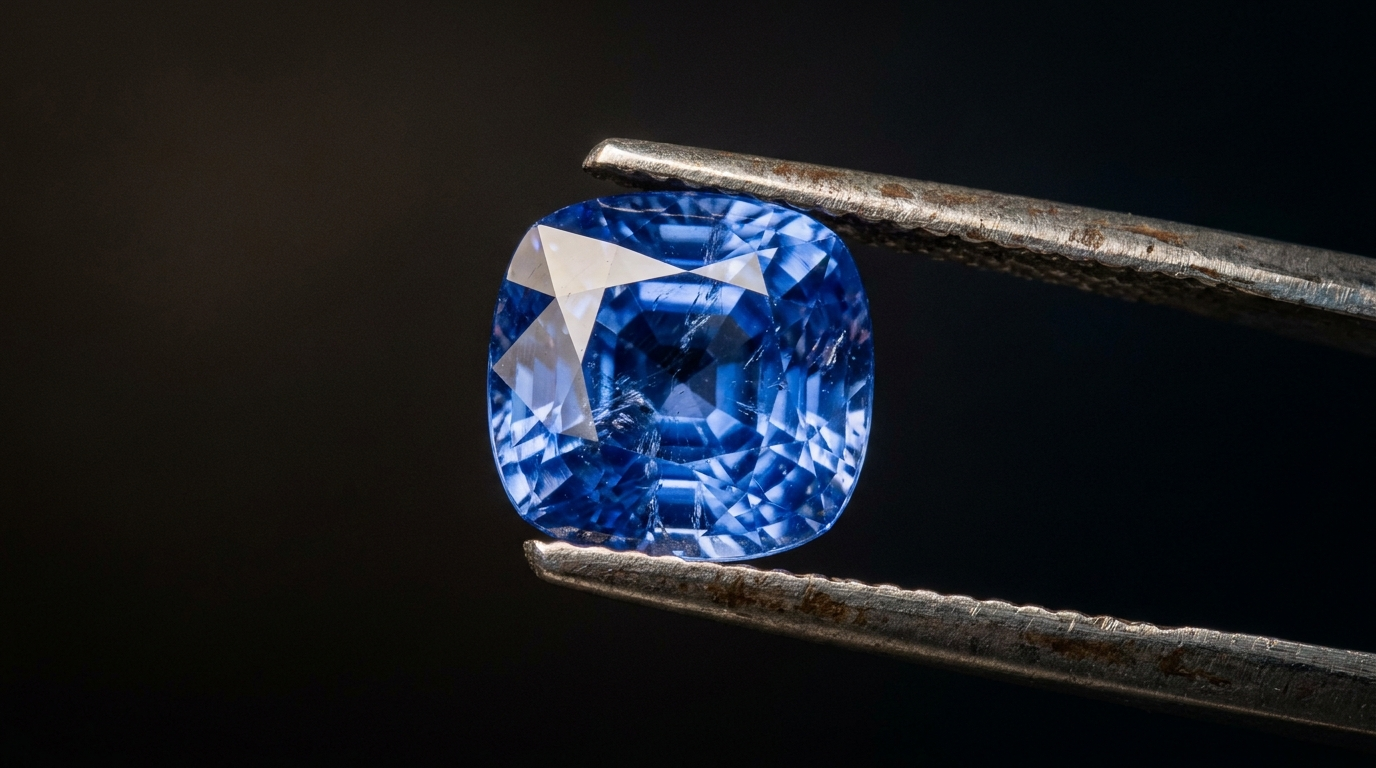
The auction record is an external, adversarial check on every dealer in the market, including us. When we quote a per-carat value for a fine heated Ceylon sapphire at a given tier, you can open the Christie's and Bonhams archives, search for comparable stones from recent seasons, and read the realised prices yourself. That level of price transparency did not exist twenty years ago. It is the single most important structural change the fine-colour market has undergone in a generation.
The record also reveals where the floor sits, not merely the ceiling. The blue-chip stones — Kashmir sapphires, Mogok rubies, Muzo emeralds — capture headlines. But the mid-market results from Bonhams, Phillips, and Heritage are where the practical lesson sits: finely heated Ceylon sapphires, well-oiled Zambian emeralds, Mahenge spinels, Paraiba tourmalines, and Afghan or Tajik rubies have compounded in per-carat value at rates that quietly rival the headline stones.
Three structural forces behind the appreciation:
Compressed global supply. Legendary mines have closed or effectively stopped producing at commercial scale. Even newer deposits — Mahenge spinel in Tanzania, Montepuez ruby in Mozambique — are commercially finite. Pockets exhaust in decades, not centuries.
Eastern capital entry. From roughly 2005, collectors from China, India, and the Gulf entered the market in force. Auction houses opened Hong Kong and Dubai salesrooms. Per-carat records for coloured stones began migrating east, and the buyer pool for fine colour became genuinely global for the first time.
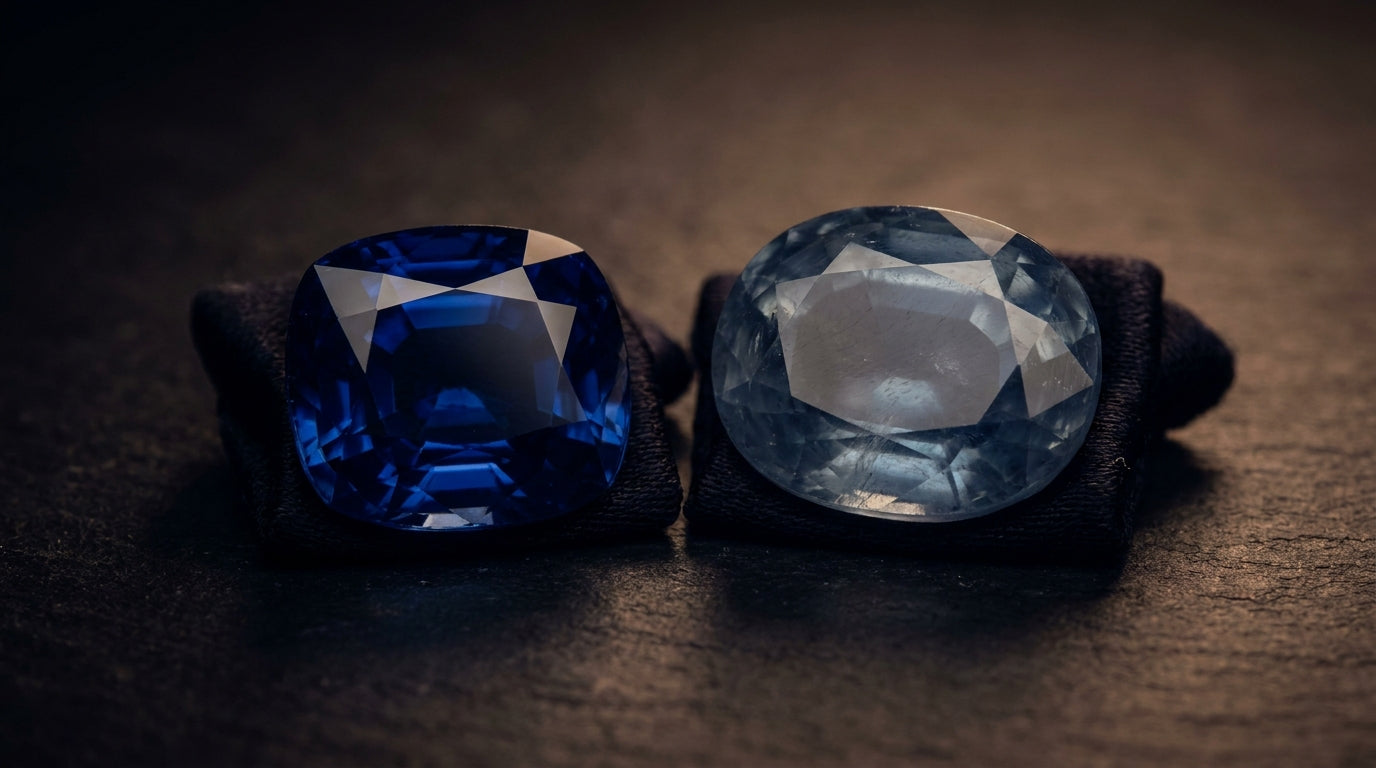
Documented treatment transparency. The rise of GIA, GRS, AGL, and Gübelin origin-and-treatment reports transformed the fine-colour market from an opaque connoisseur's world into one that serious capital can underwrite. A stone with a GRS "pigeon's blood" designation and clean treatment disclosure is a different asset from one without — and the auction record prices that difference precisely.
The practical takeaway:
For a collector building a first position, the auction record is not a bidding guide. It is a reference library. Use it to set expectations. Use it to price-check acquisitions against public comps. Use it to understand what a plausible exit looks like before you commit capital.
The full Auction Dossier curates twenty-five years of per-stone-type auction comps, identifies the specific houses and sale series to follow, and walks through how to read an auction catalogue — the estimate, the hammer, the catalogue note, the provenance line — so that every acquisition you make is grounded in the public record.
- Build Your Hard Asset Basket Now → skyjems.ca/collections/the-performance-basket (Primary — every reader)
- Prefer to read first? Download the Auction Dossier → 16-page PDF (Secondary — blog only)
- Acquiring over $50K? Request a Private Viewing → (Tertiary — high-ticket contexts only)
---
Watch the full 3:30 analysis
The 20-second version

Written by David Saad

Leave a comment
This site is protected by hCaptcha and the hCaptcha Privacy Policy and Terms of Service apply.